



What's Happening?
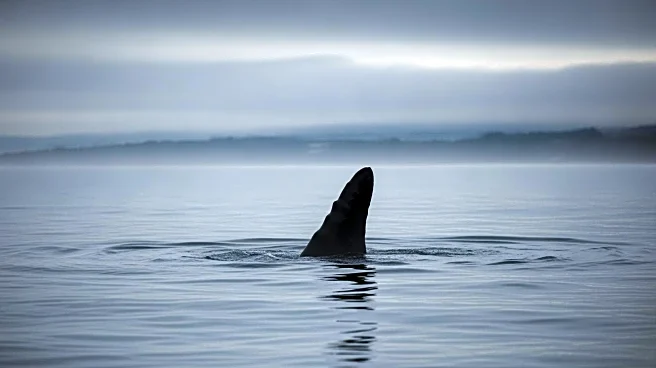
A humpback whale has become stranded in Germany's Baltic Sea, raising concerns among experts about its ability to return to the Atlantic Ocean. The whale, which has been stuck near the eastern German coastal town of Wismar, appears to be weakening despite
several rescue attempts. Authorities have established a 500-meter restricted area around the whale to allow it to rest and potentially regain strength. Till Backhaus, the environment minister of Mecklenburg-Pomerania, noted that the whale might be injured from contact with a fishing net. Efforts to free the whale using an excavator and boats have captivated the German public, with live updates and media coverage. However, the whale's activity has decreased significantly, and it is showing signs of illness, including a skin disease due to the low salt concentration in the Baltic Sea.
Why It's Important?
The situation highlights the challenges faced by marine wildlife when they stray into unsuitable environments. The Baltic Sea's low salinity and lack of appropriate nutrition pose significant threats to the whale's survival. This incident underscores the broader issue of marine animals becoming disoriented, possibly due to changes in their natural habitats or migration patterns. The whale's plight has drawn public attention, emphasizing the need for effective wildlife rescue operations and conservation efforts. The outcome of this situation could influence future policies and strategies for dealing with similar incidents, impacting environmental and wildlife protection agencies.
What's Next?
Experts are closely monitoring the whale's condition, hoping it will regain enough strength to navigate back to the Atlantic Ocean. The journey would require the whale to travel through narrow straits and cover approximately 500 kilometers. The likelihood of success is uncertain, given the whale's current weakened state. Continued efforts to assist the whale may involve further intervention if its condition deteriorates. The situation may prompt discussions among environmental groups and policymakers about improving response strategies for marine wildlife emergencies.