





What's Happening?
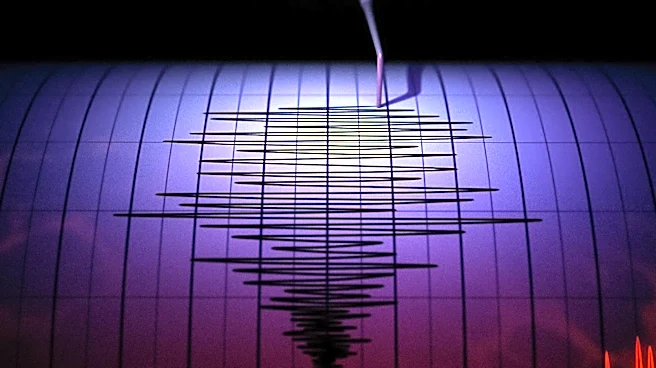
A 5.3 magnitude earthquake originated in Romania on the night of November 18, with its tremors extending across several regions of Ukraine. The seismic event was reported by both the European-Mediterranean Seismological Center (EMSC) and the U.S. Geological
Survey (USGS). The initial tremors were recorded at 2:48 a.m. local time. The earthquake's epicenter was located 13 kilometers west-southwest of Nereju commune in Vrancea County, Romania, and approximately 65 kilometers from the city of Buzău. The focus of the earthquake was at a considerable depth of 140 kilometers, a characteristic common to the seismically active Vrancea Zone. This deep origin allowed the earthquake's energy to disperse over a vast area, leading to its widespread perception. Regions in Ukraine that felt the tremors included Odesa, Kyiv, Vinnytsia, and Cherkasy. The Vrancea Zone, situated at the junction of the Southern (Romanian) and Eastern (Ukrainian) Carpathians, is known for its deep earthquakes, which can be felt from Greece to Finland. Historically, this zone has experienced 30 earthquakes of magnitude 6.5 or higher in the 20th century, with a maximum recorded magnitude of 7.6.
Why It's Important?
The occurrence of a significant earthquake in Romania, with widespread tremors felt across Ukraine, highlights the regional seismic activity and its potential impact on infrastructure and public safety. While the immediate reports do not detail significant damage or casualties in Ukraine, the fact that tremors were felt in major cities like Kyiv and Odesa underscores the vulnerability of urban areas to such natural disasters. For the U.S., this event serves as a reminder of global seismic risks and the importance of international cooperation in disaster preparedness and response. U.S. geological agencies, like the USGS, play a crucial role in monitoring and reporting such events globally, contributing to a broader understanding of tectonic activity. The event also implicitly emphasizes the need for robust building codes and emergency protocols in seismically active regions, which can inform U.S. domestic disaster planning and international aid efforts. The long-range impact of deep earthquakes, as demonstrated by this event, means that seismic events in one country can have tangible effects on neighboring nations, necessitating cross-border communication and preparedness strategies.
What's Next?
Following the earthquake, authorities in Romania and Ukraine will likely continue to monitor for aftershocks and assess any potential damage, though none has been reported yet. Public awareness campaigns regarding earthquake safety may be reinforced in affected regions. Seismological institutes, including those in the U.S., will analyze the data from this event to further understand the dynamics of the Vrancea Zone, a region known for its deep and powerful earthquakes. This ongoing research contributes to improved earthquake prediction models and hazard assessments globally. For residents in the affected Ukrainian regions, the experience may prompt a review of personal and community emergency plans. International organizations and aid agencies will remain on standby to offer assistance if any unforeseen consequences or damages emerge in the coming days. The event also serves as a natural test of early warning systems and public communication channels in both Romania and Ukraine.
Beyond the Headlines
The earthquake in Romania, felt across Ukraine, underscores the interconnectedness of geological phenomena across national borders. Beyond immediate concerns, such events highlight the broader scientific effort to understand and mitigate seismic risks. The Vrancea Zone, where this earthquake originated, is a unique subduction zone that produces intermediate-depth earthquakes, making it a subject of significant scientific interest. Data collected from events like this contribute to global seismological models, which are crucial for understanding plate tectonics and predicting future seismic activity worldwide. For the U.S., which has its own seismically active regions, insights gained from international events can inform domestic research and preparedness strategies. Furthermore, the psychological impact of experiencing an earthquake, even without significant damage, can be considerable, potentially leading to increased anxiety and a heightened sense of vulnerability among the population. This event also subtly reinforces the role of international scientific collaboration, as agencies like the USGS contribute to a global network of seismic monitoring and data sharing.