



What's Happening?
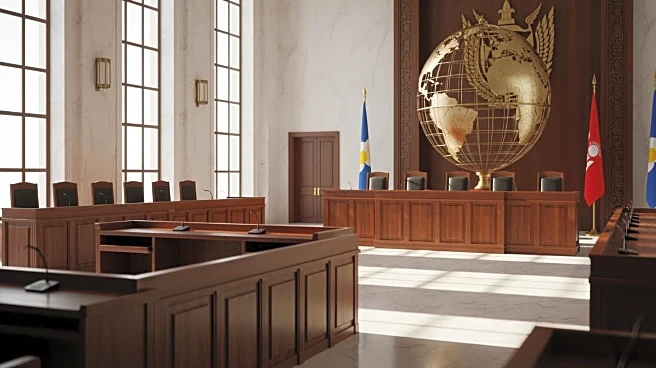
Myanmar has begun its defense at the International Court of Justice (ICJ) against allegations of genocide against the Rohingya people. The case, initiated by The Gambia in 2019, accuses Myanmar of attempting to erase the Rohingya minority through genocidal
policies. Myanmar's representative, Ko Ko Hlaing, argued that the allegations are unsubstantiated and that military operations in the Rakhine state were aimed at counter-insurgency and counter-terrorism. The Gambia, supported by the Organisation of Islamic Cooperation, contends that Myanmar's actions, including the killing of civilians and destruction of villages, demonstrate a genocidal intent. The court proceedings are expected to continue with witness testimonies, including those from Rohingya survivors, although these sessions will be closed to the public.
Why It's Important?
The case is significant as it addresses the severe human rights violations faced by the Rohingya, a Muslim minority group in Myanmar. The outcome could set a precedent for future genocide cases and influence international legal standards regarding genocide. A ruling against Myanmar could impact its international relations and reputation, potentially leading to increased diplomatic pressure and sanctions. The case also highlights the ongoing humanitarian crisis, with over a million Rohingya refugees living in camps in Bangladesh. The ICJ's decision will be closely watched as it may affect global efforts to hold nations accountable for human rights abuses.
What's Next?
The ICJ is expected to deliver a final ruling by the end of 2026. The decision could influence other pending genocide cases, such as the one brought by South Africa against Israel. Myanmar's government has expressed a commitment to repatriating Rohingya refugees, but external factors like the COVID-19 pandemic have hindered these efforts. The court's ruling will be crucial in determining Myanmar's future actions and its international standing. Observers anticipate that the case will refine the legal definitions and standards for genocide, impacting how similar cases are handled globally.