
What's Happening?
President Trump has appointed former British Prime Minister Tony Blair to a significant role in the post-war reconstruction of Gaza. Alongside Blair, a US officer has been designated to lead a new security
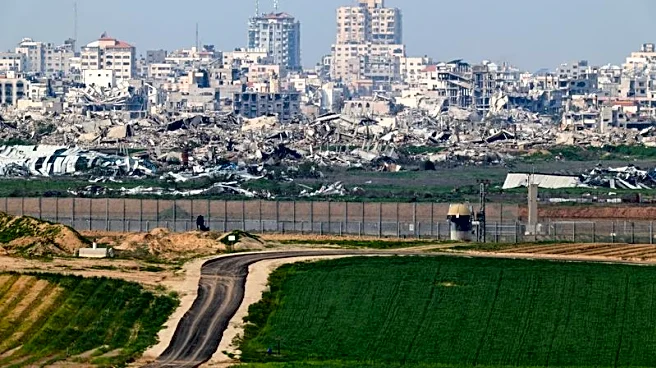
force in the region. This development is part of Trump's broader vision for economic development in Gaza, which has been heavily damaged by prolonged Israeli bombardment. The initiative includes the formation of a 'Board of Peace,' chaired by Trump, with members such as Jared Kushner, Secretary of State Marco Rubio, and Steve Witkoff. The board aims to address governance, regional relations, and investment in Gaza. Blair's involvement is notable due to his controversial history in the Middle East, particularly his role in the 2003 Iraq invasion. The US is also seeking international contributions to the security force, with Indonesia showing early interest.
Why It's Important?
This move by President Trump could significantly impact the geopolitical landscape of the Middle East. By involving Tony Blair and establishing a US-led security force, the initiative may influence the power dynamics in Gaza and the broader region. The plan's success could lead to increased stability and economic growth in Gaza, potentially reducing tensions. However, the involvement of controversial figures and the challenge of disarming Hamas pose significant hurdles. The initiative also reflects Trump's approach to foreign policy, emphasizing economic development and security collaboration. The outcome could affect US relations with Middle Eastern countries and international perceptions of US involvement in the region.
What's Next?
The next steps involve the operationalization of the 'Board of Peace' and the security force. The US will continue to seek international partners for the security force, although challenges remain, particularly regarding Hamas's disarmament. The governing committee for Gaza, led by Ali Shaath, plans to meet again soon, with intentions to begin work in Gaza. The success of these efforts will depend on diplomatic negotiations and the ability to secure cooperation from regional stakeholders. The initiative's progress will be closely watched by international observers and could influence future US foreign policy decisions in the Middle East.