





What's Happening?
Lesley Groff, a former executive assistant to Jeffrey Epstein, now resides in a $6 million home in Naples, Florida, purchased by her husband in March 2026. Groff worked for Epstein from February 2001 to July 2019, and her name appears over 100,000 times
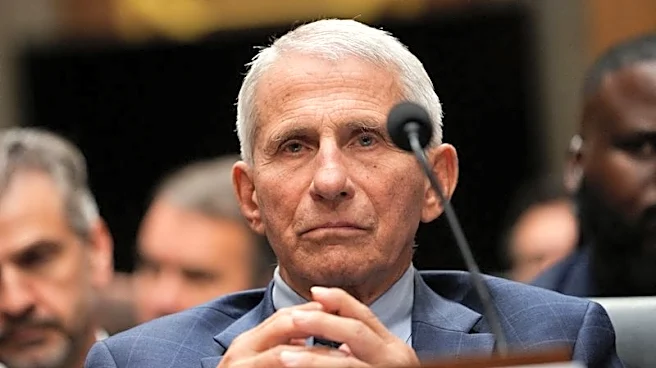
in the Epstein Library on the U.S. Department of Justice website, primarily due to her role in managing his schedule, travel, and communications. Despite her extensive involvement, Groff has not been charged with a crime and maintains she was unaware of any illicit activities involving Epstein. She testified before the House Oversight Committee in June 2026, stating that Epstein was a "master manipulator and deceiver" who kept his legitimate life separate from his secret life as an abuser. Victims of Epstein have publicly disputed Groff's testimony, claiming she was not truthful with Congress.
Why It's Important?
The continued scrutiny of individuals associated with Jeffrey Epstein, such as Lesley Groff, underscores the ongoing public and legal efforts to understand the full scope of his criminal enterprise and hold all complicit parties accountable. Groff's claims of unawareness, despite her close and long-term professional relationship with Epstein, raise questions about the extent to which his inner circle was genuinely ignorant of his activities or actively enabled them. The acquisition of a multi-million dollar property by a former aide, while not illegal, can fuel public perception of ill-gotten gains or a lack of accountability, especially when victims continue to seek justice. This situation highlights the challenges in prosecuting individuals who claim ignorance in complex criminal networks, and the ongoing debate about the responsibility of those who worked closely with perpetrators of heinous crimes.
What's Next?
The Naples Daily News and The News-Press are continuing to examine the Epstein files for information relevant to Southwest Florida, suggesting that further revelations regarding individuals connected to Epstein in the region may emerge. Public and victim advocacy groups will likely continue to challenge claims of unawareness from Epstein's associates, potentially pushing for further investigations or legal actions. The ongoing legal proceedings related to the Epstein estate and any potential new evidence could also impact the perception and legal standing of individuals like Groff. The broader conversation about accountability for those who facilitated Epstein's crimes is expected to persist, influencing public discourse and potentially leading to legislative efforts to address such issues in the future.
Beyond the Headlines
The case of Lesley Groff and her claims of ignorance despite her proximity to Epstein touches upon deeper psychological and sociological questions regarding complicity, denial, and the dynamics of power within abusive systems. It forces a societal reflection on how individuals can be seemingly unaware of egregious acts occurring within their professional or personal spheres, or how they might rationalize such ignorance. The public's strong reaction to such claims reflects a desire for comprehensive justice, not just for the primary perpetrators but also for those who may have enabled or benefited from their actions. This ongoing saga contributes to a critical examination of the structures that allowed Epstein's crimes to persist for so long and the mechanisms by which individuals within those structures may have avoided accountability.