
What's Happening?
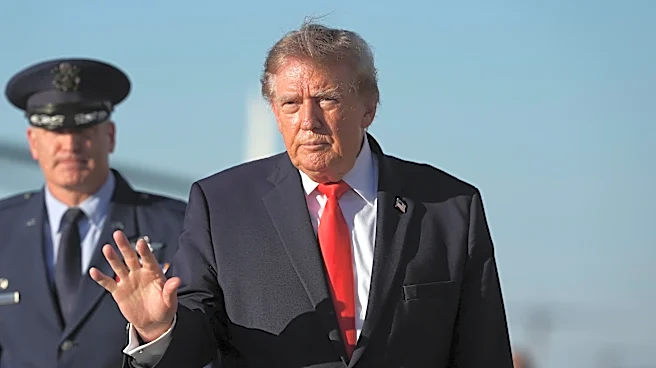
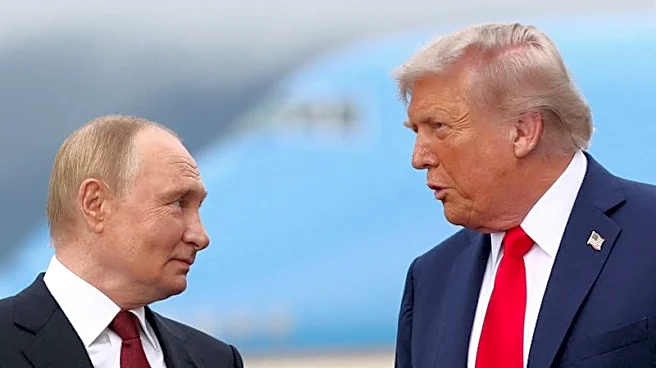
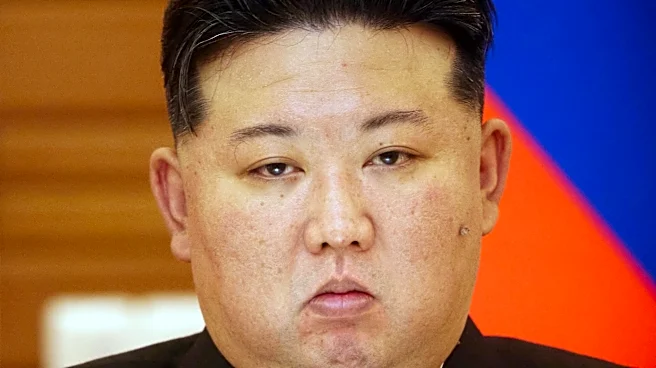
President Trump indicated on Monday that he might meet with North Korean leader Kim Jong Un during his upcoming trip to China. This potential meeting would occur while President Trump is already scheduled
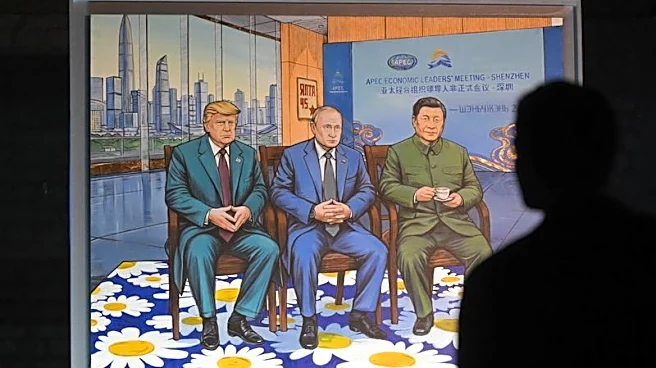
to participate in his first trilateral summit with the leaders of China and Russia in Shenzhen. The possibility of a Trump-Kim meeting was mentioned by President Trump in Washington. South Korea's Foreign Ministry has expressed hope that high-level discussions would contribute to peace and stability on the Korean Peninsula and has also raised the prospect of renewed U.S.-North Korea dialogue. However, no definitive plans for North Korean engagement or Kim Jong Un's attendance at the summit have been confirmed. The trilateral summit involving Chinese President Xi Jinping, President Trump, and Russian President Vladimir Putin is described by China as being of "groundbreaking significance" and "conducive to global stability."
Why It's Important?
A potential meeting between President Trump and North Korean leader Kim Jong Un during President Trump's visit to China would be a significant development for U.S. foreign policy and regional stability. Such a high-level encounter could signal a renewed effort to address the denuclearization of the Korean Peninsula, a long-standing and critical U.S. national security concern. The involvement of China and Russia in a trilateral summit alongside the U.S. further underscores the complex geopolitical dynamics at play, as these nations hold considerable influence over North Korea. A meeting with Kim Jong Un, if it materializes, could either open new avenues for dialogue and de-escalation or highlight persistent impasses, thereby shaping future U.S. strategy towards North Korea. For South Korea, the prospect of renewed U.S.-North Korea dialogue is crucial for regional peace and stability, as direct engagement between Washington and Pyongyang is often seen as essential for any meaningful progress. The outcome of such discussions could impact sanctions regimes, humanitarian aid, and the overall security architecture of Northeast Asia, affecting various stakeholders from international organizations to regional economies.
What's Next?
The immediate focus will be on whether the proposed meeting between President Trump and North Korean leader Kim Jong Un actually takes place during President Trump's visit to China. Official confirmations or denials from the U.S. and North Korean sides will be closely watched. If the meeting occurs, the agenda will likely center on denuclearization, sanctions relief, and security guarantees, though specific details remain speculative. The trilateral summit involving the U.S., China, and Russia will proceed as scheduled, and any discussions regarding North Korea within that forum could set the stage for or influence a potential Trump-Kim encounter. Stakeholders, including South Korea, Japan, and international bodies, will be monitoring these developments for signs of diplomatic breakthroughs or continued tensions. The results of any high-level talks could lead to further diplomatic engagements, adjustments in sanctions policies, or shifts in military postures in the region. The broader implications for global stability, particularly in East Asia, will depend heavily on the tone and substance of these interactions.
Beyond the Headlines
The potential meeting between President Trump and North Korean leader Kim Jong Un, set against the backdrop of a trilateral summit with China and Russia, highlights the intricate web of international relations and the personalized nature of high-stakes diplomacy. Beyond the immediate policy implications, such an event carries significant symbolic weight. It could either reinforce the idea that direct leader-to-leader engagement is the most effective path to resolving intractable conflicts or demonstrate the limitations of such an approach without broader diplomatic frameworks. The involvement of China and Russia in the trilateral summit also underscores the multipolar nature of global power and the necessity of engaging multiple major players to address complex regional issues. This scenario could also influence domestic political narratives in the U.S., particularly following the midterm elections, by showcasing President Trump's continued focus on foreign policy. Ethically, the engagement with a regime like North Korea raises questions about the balance between diplomatic pragmatism and human rights concerns. Culturally, such summits often become defining moments in international history, shaping perceptions of leadership and national resolve on the global stage.