


What's Happening?
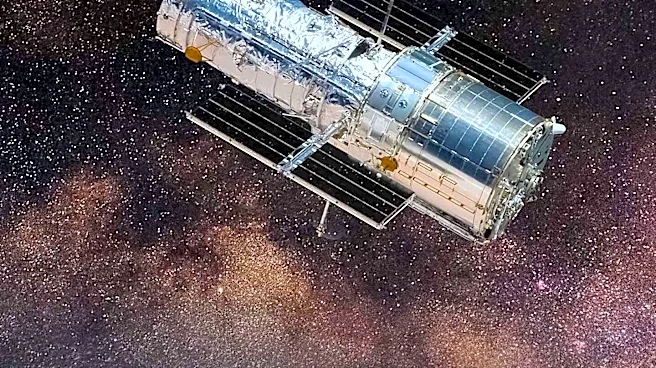
The Hubble Space Telescope, in collaboration with ground-based spectroscopic observations, has conducted a detailed study of the dwarf galaxy KKR 18, located approximately 30 million light-years from the Milky Way. Research led by Brent Tully of the University
of Hawaii revealed that KKR 18 is strikingly devoid of red giant stars, a common feature in similar galaxies. The Hubble images show a diffuse cloud of mostly blue or white stars, with only a few red stars scattered throughout. This absence of a prominent 'red giant branch' in its stellar population plot suggests a highly unusual evolutionary history for KKR 18. The team proposes that KKR 18 is a novel example of a 'late arrival' galaxy, characterized by substantial recent star formation between 100 million and 20 million years ago, producing bright, young blue stars, but with very little evidence of older stars. This classification implies that KKR 18 was delayed in its star formation compared to other galaxies.
Why It's Important?
The discovery of KKR 18 as a potential 'late arrival' galaxy offers significant insights into galactic evolution, particularly for galaxies developing in isolation. KKR 18 is situated in the Local Void, a nearly empty region away from the typical interactions and mergers that influence most galaxies. This unique location makes it an ideal case study for understanding how galaxies evolve without external disruption. The existence of such galaxies, which are predicted in some cosmological simulations where initially low mass prevents early gas clumping and cooling, challenges existing models of star formation. The discrepancy between the observed mass of KKR 18 and the masses predicted by simulations for 'late arrival' galaxies suggests that current cosmological models may need refinement. This research could lead to a better understanding of the conditions necessary for star formation and the diverse pathways galaxies take in their development, potentially altering our understanding of the universe's early history.
What's Next?
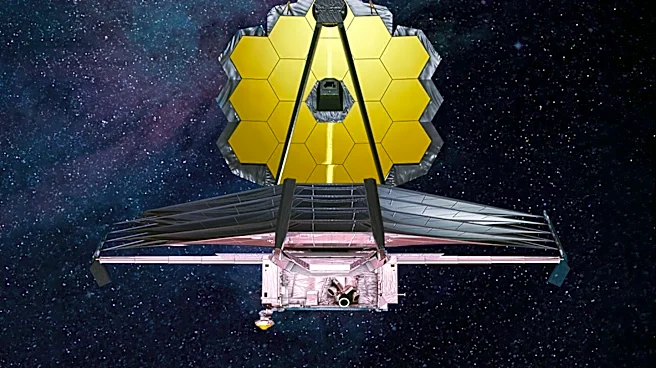
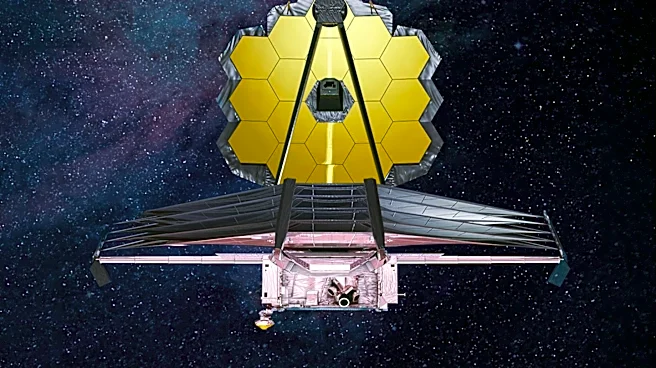
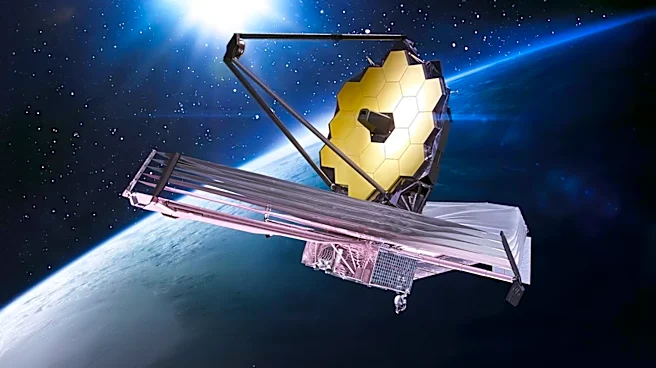
Further observations are anticipated to confirm the nature of KKR 18 and other potentially similar systems. Researchers suggest that deep imaging with advanced telescopes like the James Webb Space Telescope (JWST) or the forthcoming Extremely Large Telescope (ELT) could reveal more faint red giants if they are indeed hidden among KKR 18's stars. Such observations would either solidify the 'late arrival' classification or provide new data that could lead to alternative explanations for its unusual stellar composition. The ongoing study of KKR 18 and its potential counterparts will continue to test and refine cosmological simulations, pushing the boundaries of our understanding of galaxy formation and evolution. Future research will also focus on identifying other galaxies with similar characteristics to determine if KKR 18 represents a broader class of celestial objects.
Beyond the Headlines
The identification of KKR 18 as a 'late arrival' galaxy highlights the continuous capacity of astronomical research to uncover unexpected phenomena even in our cosmic neighborhood. This finding underscores the complexity and diversity of galactic evolution, suggesting that the universe may harbor more varied developmental paths for galaxies than previously understood. It also emphasizes the critical role of advanced observational tools like the Hubble Space Telescope in providing detailed data that challenges theoretical models. The concept of a galaxy being 'left behind' in the process of star formation introduces a new dimension to galactic classification and evolution, potentially influencing how astronomers interpret the formation of structures in the early universe. This discovery encourages a re-evaluation of the factors that trigger and sustain star formation across different cosmic environments.