
What's Happening?
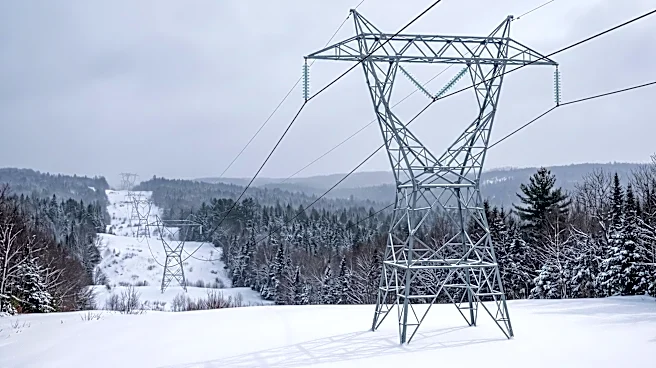
Hydro-Quebec and a consortium of Massachusetts utilities, including Eversource, National Grid, and Unitil, have initiated dueling lawsuits in federal court. The legal dispute centers on alleged contract
violations related to service interruptions on a high-voltage power line, the New England Clean Energy Connect (NECEC), which traverses western Maine. The Massachusetts utilities claim that Hydro-Quebec ceased electricity delivery over the NECEC line shortly after its operational launch in January, coinciding with a period of extreme cold. This alleged cessation forced the utilities to procure more expensive and higher-emitting power sources, leading to a demand for $40 million in damages for breach of a 20-year contract. Conversely, Hydro-Quebec asserts that electric demands within its own province during the severe cold constituted a 'force majeure' event, thereby exempting it from contractual obligations. Hydro-Quebec is counter-suing for approximately $50 million, alleging non-payment for clean energy deliveries by the Massachusetts utilities. The NECEC line was developed to supply clean electricity to Massachusetts and aid in achieving the state's greenhouse gas reduction targets, despite facing significant opposition and legal challenges during its construction.
Why It's Important?
This legal confrontation highlights critical challenges in the U.S. energy sector, particularly concerning cross-border energy agreements and the reliability of clean energy infrastructure. The outcome of these lawsuits could set precedents for how 'force majeure' clauses are interpreted in long-term energy contracts, especially in the context of climate-related extreme weather events. For Massachusetts, the NECEC line is a cornerstone of its clean energy strategy and greenhouse gas reduction goals. Interruptions and subsequent legal battles threaten the stability and affordability of its energy supply, potentially impacting consumers through higher electricity costs. The dispute also underscores the complexities of integrating renewable energy into the grid, revealing vulnerabilities in supply chains and the need for robust contractual frameworks that account for unforeseen circumstances. Furthermore, the case could influence future investment and development of inter-state and international transmission projects, as developers and utilities will closely scrutinize the risks associated with such ventures.
What's Next?
The federal court will now deliberate on the dueling lawsuits filed by Hydro-Quebec and the Massachusetts utilities. The legal proceedings will likely involve extensive discovery and arguments regarding the interpretation of the 20-year contract, specifically the 'force majeure' clause. A key aspect will be determining whether the extreme cold in Quebec legitimately constituted an uncontrollable event that absolved Hydro-Quebec of its delivery obligations. The court's decision will have significant implications for both parties, potentially resulting in substantial financial penalties or awards. Beyond the immediate legal outcome, this case may prompt a re-evaluation of existing and future energy contracts to better define responsibilities and contingencies during periods of high demand or environmental stress. Stakeholders, including energy regulators, environmental groups, and consumers, will closely monitor the proceedings, as the resolution could influence energy policy and infrastructure development across the New England region and beyond.
Beyond the Headlines
This legal battle extends beyond a simple contract dispute, touching upon broader themes of energy security, climate change adaptation, and regional energy independence. The reliance on cross-border energy imports, while beneficial for diversifying energy sources and promoting clean energy, introduces geopolitical and logistical complexities. The incident underscores the vulnerability of energy grids to extreme weather events, a growing concern in the era of climate change. It also brings to light the tension between a supplier's domestic energy needs and its international contractual obligations. The public perception of clean energy projects could also be affected; if a major clean energy initiative faces reliability issues and protracted legal disputes, it might fuel skepticism about the feasibility and stability of such large-scale projects. Ultimately, this case could catalyze a deeper discussion on how to build more resilient and adaptable energy systems that can withstand both market fluctuations and environmental challenges, while ensuring equitable distribution of energy resources.