








What's Happening?
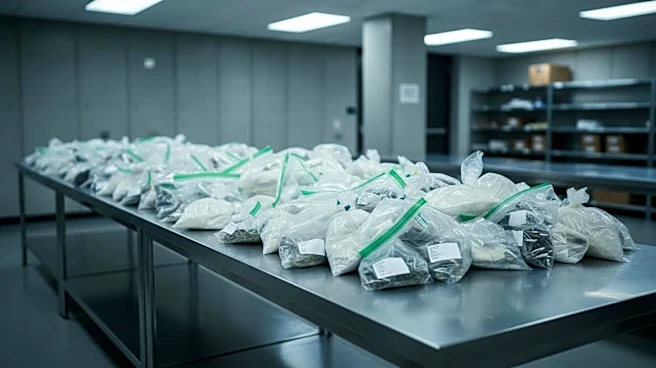
Agents from the National Drug Control Directorate (DNCD) in the Dominican Republic seized 1,360 packages, totaling 1.3 tons, of suspected cocaine and arrested three Dominican men following an extensive air, sea, and land pursuit off the coast of Baní,
Peravia province. The operation involved the Dominican Republic Navy (ARD) and Air Force (FARD), coordinated by the Public Ministry and state intelligence agencies. Crucially, the operation received support from the U.S. Joint Interagency Task Force South (JIATFS) and the U.S. Drug Enforcement Administration (DEA), alongside the Colombian Air Force. The arrested individuals, identified as Luis Enríquez Díaz Sánchez, Michael Antonio Herrera Guerrero, and Víctor Alfonso Morel Díaz, are expected to face coercive measures for alleged violations of Law 50-88 on Drugs and Controlled Substances. Authorities detected several men moving in the Caribbean Sea with a significant drug shipment, leading to a 15-hour pursuit that culminated in the interception of a 32-foot 'Eduardoño' type boat without a name or registration, equipped with two 250-horsepower outboard motors.
Why It's Important?
This significant drug seizure underscores the ongoing efforts by U.S. and international agencies to combat drug trafficking in the Caribbean, a critical transit point for illicit substances heading to the United States. The involvement of JIATFS and the DEA highlights the U.S.'s commitment to supporting regional partners in interdiction operations, which directly impacts the flow of drugs into American communities. The successful coordination between multiple national and international entities demonstrates the effectiveness of collaborative anti-narcotics strategies. For the U.S., reducing the supply of cocaine at its source and transit points is a key component of its broader drug policy, aiming to mitigate public health crises and reduce crime associated with drug distribution. The disruption of this particular drug network, which reportedly uses fast boats to smuggle illicit substances from South America, represents a blow to organized crime and could lead to further investigations and arrests, potentially impacting drug availability and prices in the U.S. market.
What's Next?
The DNCD and the Public Ministry will continue their investigations to identify and apprehend other members of the drug trafficking network. The three arrested individuals will be presented to the Public Ministry for coercive measures, which could include pre-trial detention. The seized substances will be sent to the National Institute of Forensic Sciences (INACIF) for precise identification and weighing. This operation may lead to increased surveillance and interdiction efforts in the Peravia province and other coastal areas known for drug smuggling. The continued collaboration between Dominican, U.S., and Colombian authorities is expected, as they work to dismantle these transnational criminal organizations. The U.S. will likely continue to provide intelligence and logistical support to its partners in the region to disrupt drug supply chains, aiming to reduce the availability of illicit drugs within its borders.
Beyond the Headlines
The 'modus operandi' of introducing illicit substances from South America via fast boats highlights the adaptive nature of drug trafficking organizations, constantly seeking new routes and methods to evade detection. The success of this operation, involving advanced surveillance and a multi-agency response, demonstrates the increasing sophistication of counter-narcotics efforts. However, it also points to the persistent challenge posed by the vastness of maritime routes and the resources available to these criminal groups. The long-term implications extend beyond immediate seizures, impacting regional stability, economic development, and public safety. The U.S.'s sustained engagement in such international operations reflects a recognition that drug trafficking is a global issue requiring a coordinated, multi-faceted approach, addressing both supply reduction and demand reduction strategies. The ongoing fight against drug trafficking also raises questions about the socio-economic factors that drive individuals to participate in such illicit activities and the broader impact on communities in both source and transit countries.