



What's Happening?
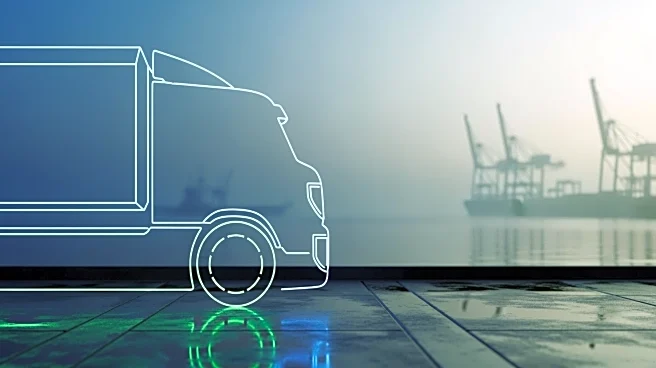
A pilot project at Port Newark, New Jersey, will introduce six hydrogen fuel cell electric trucks to replace traditional diesel trucks for short-distance transport, known as drayage. Announced by New Jersey Governor Phil Murphy, this initiative aims to reduce
greenhouse gas emissions at one of the busiest ports on the East Coast. The trucks, provided by Hyundai, will transport shipping containers to nearby warehouses and rail yards. The project is funded by the New Jersey Economic Development Authority and managed by the Center for Advanced Infrastructure and Transportation at Rutgers University. Partners include PSEG, the Center for Transportation and the Environment, and the Port Authority of New York and New Jersey.
Why It's Important?
This initiative is significant as it addresses the pressing issue of air pollution in and around seaports, which are major contributors to local greenhouse gas emissions. By replacing diesel trucks with hydrogen fuel cell trucks, the project aims to demonstrate the viability of zero-emission vehicles in real-world logistics operations. This could pave the way for broader adoption of hydrogen-powered transportation, potentially reducing the environmental impact of freight transport. The project also positions New Jersey as a hub for research and development in hydrogen technology, which could drive economic growth and job creation in the state.
What's Next?
The pilot project will focus on collecting data to establish performance benchmarks for hydrogen trucks in port logistics. This data will be crucial for making informed decisions about future investments in zero-emission freight solutions. If successful, the project could lead to expanded use of hydrogen trucks at other ports and along major freight corridors. Additionally, the development of infrastructure, such as hydrogen refueling stations, will be necessary to support the wider adoption of this technology.
Beyond the Headlines
The project highlights the ongoing transition in the transportation sector towards cleaner energy solutions. It underscores the importance of state-level initiatives in driving environmental policy, especially in the face of changing federal energy policies. The success of this project could influence other states to adopt similar measures, contributing to a nationwide shift towards sustainable transportation. Moreover, it raises questions about the future of hydrogen as a key player in the clean energy landscape, alongside battery-electric vehicles.