





What's Happening?
The U.S. Embassy in Beirut issued a statement on Thursday, asserting that south Lebanon does not belong to Hezbollah and that the Lebanese people prefer state institutions over the Iran-backed group's armed presence. The embassy's statement, posted on the X
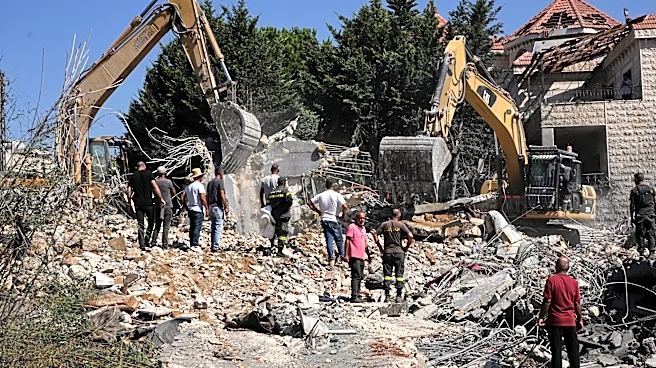
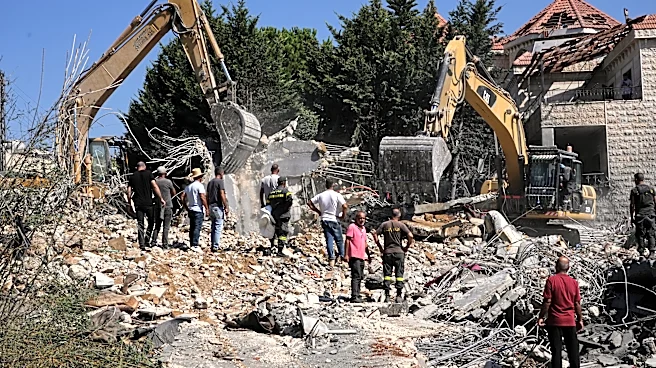
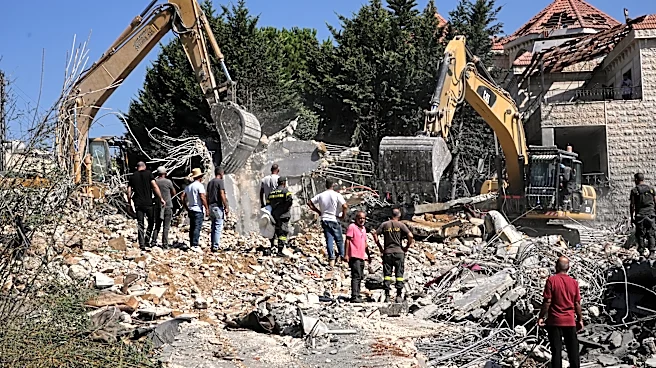
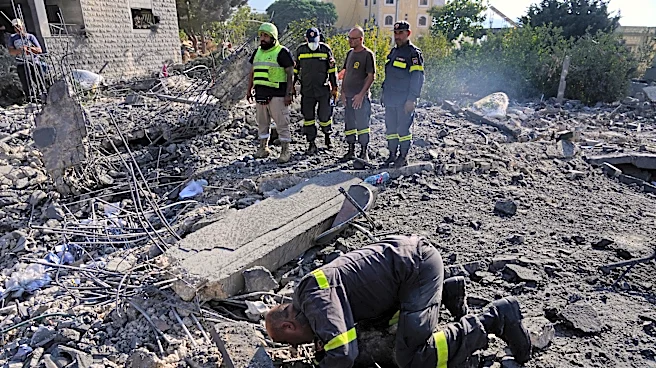
platform, commended Lebanese communities and expressed support for the Lebanese government's objective to establish sovereignty, enforced by the Lebanese Armed Forces (LAF). This aligns with the goal of ensuring that decisions regarding war and peace are exclusively made by the Lebanese state. The statement underscores the U.S. position that regional actors or militias should not control southern Lebanon. This declaration comes amidst ongoing tensions and military operations in the region, with the Lebanese army accusing Israel of escalating hostilities in the south, which they claim threatens existing agreements and hinders efforts to stabilize the area.
Why It's Important?
This statement from the U.S. Embassy is significant as it publicly reinforces American policy regarding Lebanese sovereignty and implicitly criticizes Hezbollah's influence. By supporting the Lebanese government and its armed forces, the U.S. is signaling its commitment to strengthening state authority in Lebanon and diminishing the power of non-state actors. This stance is crucial for regional stability, as Hezbollah's armed presence and alignment with Iran have been a major source of conflict and instability in the Middle East. The U.S. emphasis on the Lebanese people's preference for state institutions over militias highlights a potential internal dynamic within Lebanon, suggesting a desire among the populace for a unified and sovereign state free from external or paramilitary control. This could empower moderate political forces within Lebanon and provide a diplomatic avenue for reducing tensions with neighboring countries, particularly Israel.
What's Next?
The U.S. Embassy's statement is likely to be followed by continued diplomatic efforts to bolster the Lebanese state and its institutions. This could involve further support for the Lebanese Armed Forces, both in terms of training and equipment, to enhance their capacity to assert control over the country's territory. The U.S. may also engage in diplomatic initiatives aimed at facilitating dialogue between Lebanese political factions to strengthen national unity and reduce Hezbollah's political and military leverage. However, Hezbollah's response to such statements will be critical. Given its entrenched position and strong ties to Iran, any attempts to disarm or marginalize the group are likely to face significant resistance. The Lebanese army's recent accusations against Israel for escalating hostilities suggest that the path to full state sovereignty and stability in south Lebanon will remain challenging and potentially fraught with continued military and political confrontations.
Beyond the Headlines
The U.S. Embassy's declaration touches upon deeper issues of national identity, state legitimacy, and regional power dynamics. The assertion that south Lebanon 'does not belong' to Hezbollah challenges the group's narrative of being a legitimate resistance force and a protector of Lebanese territory. This framing seeks to delegitimize Hezbollah's armed presence and re-establish the primacy of the state. Furthermore, the statement implicitly acknowledges the complex interplay between internal Lebanese politics and broader regional conflicts, particularly the U.S.-Iran rivalry. By advocating for a strong, sovereign Lebanese state, the U.S. is attempting to create a bulwark against Iranian influence in the Levant. The long-term success of this strategy hinges on the ability of the Lebanese government to effectively govern and provide security, thereby eroding the popular support and necessity for non-state armed groups like Hezbollah.