
What's Happening?
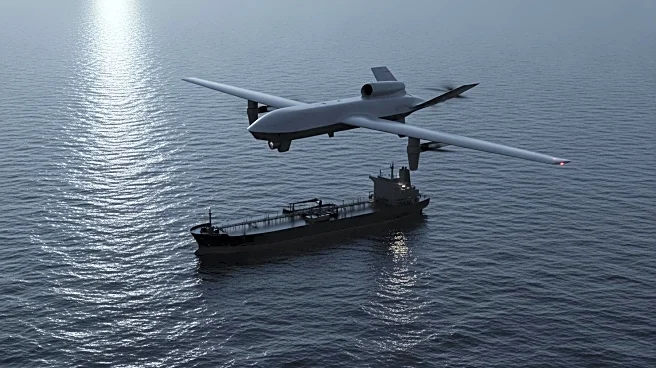
A shadow fleet tanker named Qendil, registered in Qatar, was attacked by Ukraine using long-range drones in the Mediterranean. The attack occurred south of Crete, far from the Ukrainian border, as the tanker was returning
from a trip between Russian oil terminals and India. Despite the damage, the tanker continued to operate and reached Aliaga, Turkey, before anchoring near the Canakkale Strait. Turkish officials successfully refloated the tanker after it ran aground near Bozcaada. The tanker, under sanctions from the UK and EU, has been involved in frequent trips as part of the shadow fleet.
Why It's Important?
This incident underscores the increasing use of drone technology in maritime conflicts, raising concerns about the security of international shipping routes. The attack on the Qendil highlights the strategic use of drones in targeting vessels involved in the shadow fleet, which operates under complex geopolitical dynamics. The ability of Ukraine to strike targets far from its borders demonstrates the evolving nature of warfare and the potential for drones to disrupt global trade. This development may prompt nations to enhance their maritime security measures and reconsider the implications of drone warfare on international shipping.
What's Next?
The refloating of the Qendil allows it to proceed to repair facilities in Turkey, but the incident may lead to increased scrutiny of shadow fleet operations. Nations involved in maritime trade may seek to bolster their defenses against drone attacks, potentially leading to new regulations and security protocols. The ongoing conflict between Ukraine and Russia could see further use of drones in maritime settings, prompting international discussions on the regulation and control of drone technology in warfare.