



What's Happening?
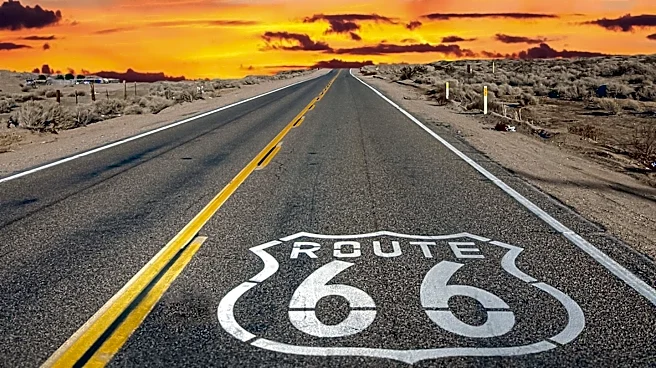
As Route 66 marks its centennial in 2026, travelers are encouraged to explore its historic path and take detours to several UNESCO World Heritage sites located within reach of the iconic highway. The 'Mother Road,' established in 1926 and decommissioned
in 1985, still offers a drivable route from Chicago to Los Angeles. The article highlights six such sites: Frank Lloyd Wright’s 20th-Century Architecture (Unity Temple and Robie House in Illinois, and Hollyhock House in California), Cahokia Mounds State Historic Site in Illinois, Taos Pueblo in New Mexico, Chaco Culture National Historical Park in New Mexico, and Grand Canyon National Park in Arizona. These detours range from a few miles to about 95 miles off Route 66, offering diverse cultural, historical, and natural experiences.
Why It's Important?
This initiative significantly enhances the cultural and educational value of a Route 66 road trip, transforming it from a nostalgic drive into an opportunity for deeper historical and environmental engagement. By connecting the 'Mother Road' with UNESCO World Heritage sites, it promotes the preservation and appreciation of both American architectural masterpieces and ancient indigenous cultures, as well as natural wonders. This approach can boost tourism in lesser-known areas near Route 66, contributing to local economies. For travelers, it offers a unique blend of Americana and global heritage, enriching their understanding of the U.S.'s diverse past and natural grandeur. It also highlights the U.S.'s commitment to preserving sites of universal value, aligning with international heritage conservation efforts.
What's Next?
The centennial celebration of Route 66 and the promotion of nearby UNESCO sites are likely to increase interest in road trips along this historic highway. This could lead to more resources being allocated for the preservation and maintenance of Route 66 itself, as well as enhanced visitor services at the associated World Heritage sites. Travel agencies and tourism boards may develop specialized itineraries that integrate these detours, catering to travelers seeking both iconic American experiences and globally recognized heritage. Educational programs and interpretive materials at these sites could also see development to further engage visitors with the rich history and significance of these locations. The success of this initiative could also inspire similar efforts to connect other historic American routes with cultural and natural landmarks.
Beyond the Headlines
The integration of UNESCO World Heritage sites into the Route 66 experience underscores a broader narrative about how America interprets and presents its heritage. It moves beyond the romanticized image of the open road to include deeper layers of history, from pre-Columbian civilizations at Cahokia Mounds and Taos Pueblo to the architectural innovations of Frank Lloyd Wright, and the geological marvels of the Grand Canyon. This approach encourages a more comprehensive understanding of American identity, acknowledging its indigenous roots, artistic achievements, and natural wonders. It also highlights the ongoing challenge of balancing tourism development with the delicate preservation of these irreplaceable sites, ensuring their integrity for future generations while making them accessible to the public.