



What's Happening?
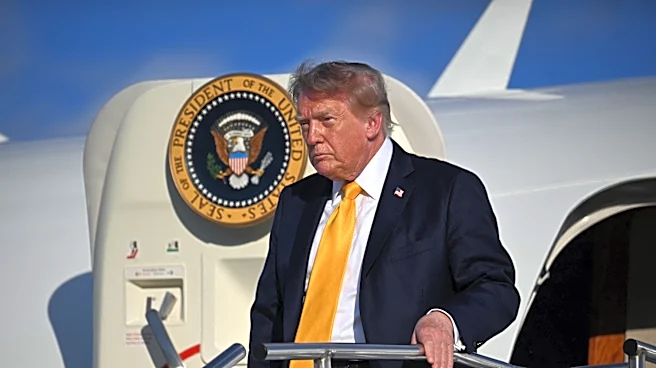
Republican senators are indicating that the Digital Asset Market Clarity Act is likely to fail next week, primarily due to an unresolved dispute over ethics provisions concerning President Trump and his family. Senator Mike Rounds (R-S.D.) stated the bill
'does not look good right now,' and Senator Thom Tillis (R-N.C.) suggested it would fail if the White House does not bridge the gap on the ethics language. Democrats, including Senator Kirsten Gillibrand (D-N.Y.), have consistently demanded a conflict-of-interest provision covering senior officials, including the President. While a White House spokesperson affirmed President Trump's desire for the bill's passage and claimed agreement to comprehensive ethics provisions, Democrats maintain that talks have made little progress. The House passed the bill in July 2025, and the Senate Banking Committee advanced it in May, but it stalled over the summer due to lobbying efforts and the ethics debate. An updated text from Senator Lummis (R-Wyo.) in July included an ethics section that would bar public officials and their spouses, including the President, from issuing or sponsoring digital assets for payment, with a sunset in January 2029 and enforcement by the attorney general.
Why It's Important?
The potential failure of the Digital Asset Market Clarity Act due to ethics provisions highlights a significant political and ethical impasse in U.S. policymaking. This bill is crucial for establishing regulatory clarity in the burgeoning crypto market, which could impact financial innovation, consumer protection, and America's leadership in digital assets. The disagreement over ethics, specifically concerning the financial activities of President Trump and his family, underscores a broader concern about conflicts of interest in government. Democrats' insistence on these provisions reflects a desire to ensure that public officials do not personally benefit from their positions or influence over policy, particularly in emerging and potentially lucrative sectors like digital assets. The inability to reach a consensus on this issue could delay critical legislation, leaving the crypto market in a state of regulatory uncertainty and potentially hindering its growth and adoption within the U.S. It also signals the ongoing tension between the executive and legislative branches regarding ethical oversight and accountability.
What's Next?
A procedural vote on September 15 will determine if the Digital Asset Market Clarity Act receives floor time in the Senate. However, given the current Republican sentiment, it is unlikely to pass without Democratic support, which is contingent on resolving the ethics dispute. Majority Leader John Thune (R-S.D.) filed cloture on the motion to proceed, requiring 60 votes to open debate, a number Republicans cannot reach alone. A defeat in this vote would not formally kill the bill but would significantly reduce its chances of passage, especially with the limited session days remaining before the November 3 midterms in 2026. Senator Cynthia Lummis (R-Wyo.) has already assigned blame, suggesting that if the bill fails, it will be due to Democrats not compromising on a bipartisan bill. This indicates that the ethics debate will continue to be a major hurdle, and without a resolution, the future of comprehensive crypto regulation in the U.S. remains uncertain. Stakeholders in the banking and crypto industries will be closely watching these developments, as the outcome will directly impact their operational and investment strategies.
Beyond the Headlines
The impasse over the Digital Asset Market Clarity Act and its ethics provisions reveals a deeper struggle over the integrity of public service and the evolving landscape of financial regulation. The debate extends beyond the specific details of crypto assets to the fundamental question of how to prevent conflicts of interest in an era where financial markets are increasingly complex and interconnected with political power. The proposed ban on public officials and their spouses from sponsoring digital assets reflects a growing recognition that traditional ethics rules may not adequately address the unique challenges posed by new technologies. This situation could set a precedent for how future legislation addresses potential conflicts of interest in other emerging industries. Furthermore, the public's perception of government trustworthiness is at stake; the inability to pass a bill due to perceived self-interest could further erode confidence in political institutions. The long-term implications include a potential re-evaluation of ethics guidelines for all public officials, aiming to create a more robust framework that anticipates and mitigates conflicts in a rapidly changing economic and technological environment.