






What's Happening?
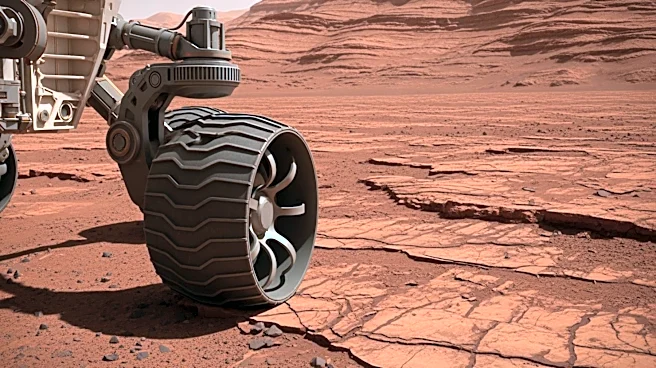
NASA's Perseverance rover has discovered that water played a significant role in forming minerals across Mars' Jezero Crater. The rover's findings, published in the Journal of Geophysical Research: Planets, show that different rock formations in the crater
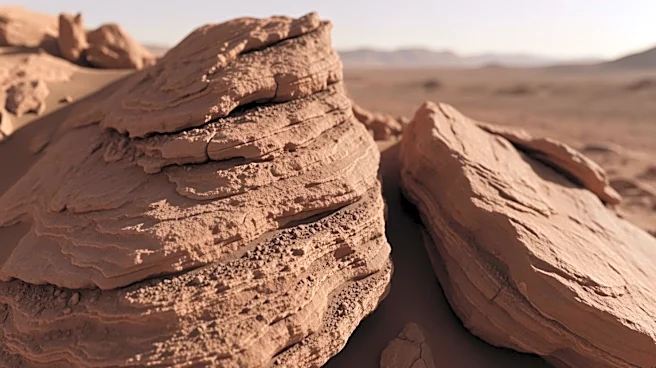
share similar mineral fingerprints, indicating a watery past. The study, led by Elise Clavé, reveals that igneous and sedimentary rocks in the crater contain water-linked minerals, suggesting widespread water influence. The presence of carbonates, formed from reactions between rocks and carbon dioxide with water, points to past aqueous processes that shaped the Martian landscape.
Why It's Important?
The discovery of water's extensive impact on Mars' geology provides crucial insights into the planet's past climate and habitability. Understanding the role of water in shaping Martian rocks helps scientists reconstruct the planet's environmental history, offering clues about its potential to support life. The findings also contribute to broader planetary science, informing models of planetary evolution and the conditions necessary for life. As Mars exploration continues, these insights may guide future missions in the search for signs of past or present life on the Red Planet.
What's Next?
Perseverance will continue to explore the Jezero Crater, using its advanced instruments to analyze rock samples and gather data on Mars' geological history. The rover's ongoing mission aims to identify signs of ancient microbial life and collect samples for future return to Earth. Scientists will use these samples to conduct detailed laboratory analyses, potentially uncovering more about Mars' past climate and habitability. The findings may also inform the design of future missions, including human exploration of Mars, by identifying regions of interest for further study.