





What's Happening?
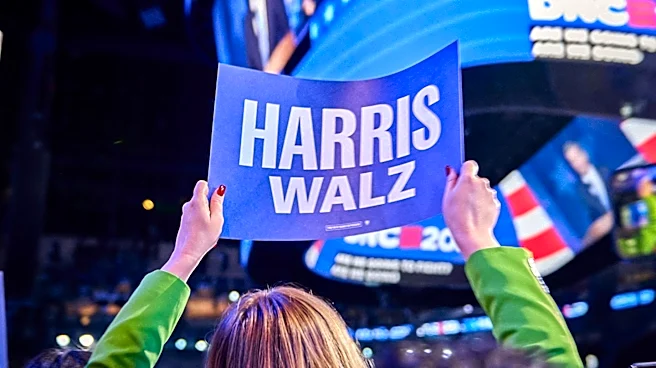
Two prominent Democratic candidates in Iowa, gubernatorial nominee Rob Sand and Senate candidate Josh Turek, have indicated they do not want former Vice President Kamala Harris to campaign for them. A spokesperson for Rob Sand's campaign explicitly stated
that they do not seek an endorsement from Harris, nor do they want her to appear at rallies or be involved in the campaign. This position marks a notable change from 2018, when Harris supported Sand's successful bid for Iowa state auditor. Similarly, Josh Turek, who is challenging Rep. Ashley Hinson (R-IA) for a Senate seat, also expressed a desire to keep Harris away from his campaign.
Why It's Important?
This decision by Iowa's Democratic candidates highlights a strategic calculation in a state that leans Republican. It suggests a perception that association with a national Democratic figure like Kamala Harris might be detrimental to their campaigns in a red state, potentially alienating moderate or independent voters. This move could be an attempt to localize their campaigns, focusing on state-specific issues and presenting themselves as independent of national party figures. For the Democratic Party, it signals a challenge in effectively deploying national surrogates in certain regions, potentially impacting fundraising and voter mobilization efforts in competitive races. It also reflects the ongoing debate within the party about how to appeal to a broader electorate in diverse political landscapes.
What's Next?
The campaigns of Rob Sand and Josh Turek will likely continue to focus on local issues and grassroots efforts, aiming to build support without the direct involvement of national Democratic figures. This strategy will be tested as the election cycle progresses, and its effectiveness could influence future campaign decisions in other red-leaning states. For the Democratic Party, this situation may prompt a re-evaluation of how national figures are utilized in state-level campaigns, potentially leading to more tailored and localized approaches. The outcome of these Iowa races will provide insights into the efficacy of distancing from national party figures in challenging electoral environments.
Beyond the Headlines
This development points to a deeper strategic dilemma for national political parties in states with strong partisan leanings. The decision by Sand and Turek to distance themselves from Kamala Harris could be interpreted as an acknowledgment of the current political polarization and the challenges of national branding in local elections. It raises questions about the perceived electability of national figures in certain regions and the extent to which local candidates can successfully carve out an independent identity. This trend could lead to a more fragmented political landscape, where state and local elections are increasingly fought on distinct terms, rather than being solely influenced by national party platforms or figures. It also highlights the ongoing struggle for Democrats to regain ground in traditionally Republican states.