
What's Happening?
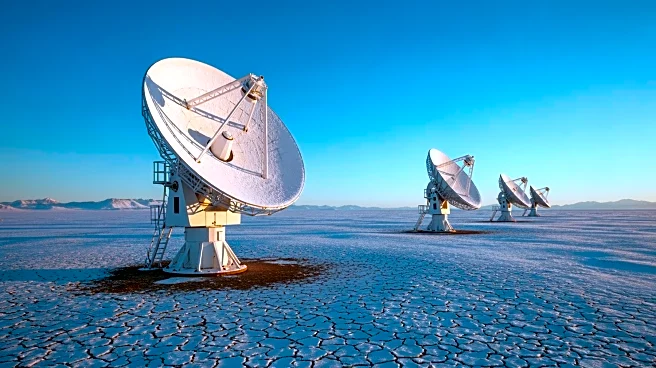
In a rare meteorological event, the Atacama Desert in Chile, known as one of the driest places on Earth, experienced a significant snowfall in July. This unusual weather phenomenon temporarily shut down
the Atacama Large Millimeter/submillimeter Array (ALMA) observatory, a major astronomical research facility. The snowstorm, caused by a 'cold-core cyclone' drifting from the north, covered over half of the desert with snow. The ALMA observatory, which consists of more than 50 radio dishes, was forced into 'survival mode,' halting its operations to prevent snow accumulation on its equipment. This event is not unprecedented, as similar snowfalls occurred in the region in 2011, 2013, and 2021.
Why It's Important?
The snowfall in the Atacama Desert highlights the potential impacts of climate change on even the most arid regions of the world. The Atacama is a critical site for astronomical research due to its dry and elevated conditions, which minimize atmospheric interference. The temporary shutdown of the ALMA observatory underscores the vulnerability of scientific infrastructure to unexpected weather events. Additionally, the occurrence of such rare precipitation events could indicate shifting climate patterns, potentially affecting the desert's unique ecosystem and the global scientific community that relies on its stable conditions for research.
What's Next?
If climate change continues to alter weather patterns, the Atacama Desert may experience more frequent precipitation events, which could impact its status as one of the driest places on Earth. This could lead to more frequent disruptions of astronomical research activities. Scientists and policymakers may need to consider adaptive strategies to protect critical research infrastructure like the ALMA observatory. Additionally, further studies could be conducted to understand the long-term implications of these weather changes on the desert's ecosystem and its suitability for scientific research.
Beyond the Headlines
The rare snowfall in the Atacama Desert also raises questions about the broader environmental and ecological impacts of climate change. The desert's unique flora and fauna, adapted to extreme aridity, could face challenges if precipitation becomes more common. This event also serves as a reminder of the interconnectedness of global climate systems and the need for comprehensive climate monitoring and adaptation strategies. The scientific community may need to reassess the resilience of research facilities in remote and extreme environments to ensure the continuity of critical scientific observations.