
What's Happening?
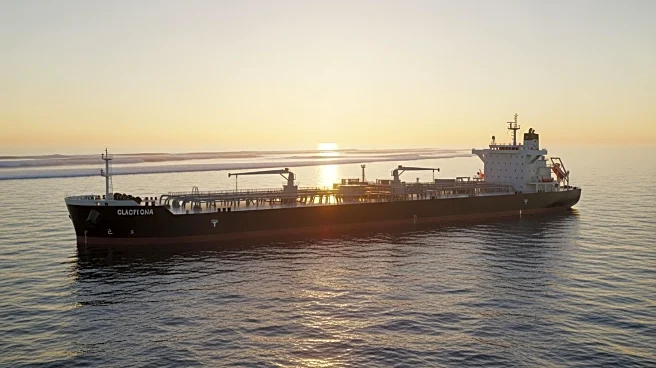
Venezuela's state-run oil company, PDVSA, has resorted to using floating oil storage as its onshore tanks reach capacity. This development follows the U.S. Coast Guard's interception of tankers carrying
Venezuelan crude, part of a broader U.S. strategy to enforce sanctions on Venezuela. The U.S. has targeted a 'shadow fleet' of vessels transporting sanctioned oil, leading to a backlog of oil in Venezuelan waters. PDVSA, producing approximately 1.1 million barrels of crude daily, has begun transferring oil to tankers to prevent production cuts. Despite these challenges, Chevron, a key joint-venture partner, continues to export crude, primarily to China, which accounts for 80% of Venezuela's oil exports. The situation has led to increased oil inventories, with PDVSA's onshore stocks at the Jose terminal rising significantly.
Why It's Important?
The use of floating storage by PDVSA highlights the impact of U.S. sanctions on Venezuela's oil industry, a critical component of its economy. The sanctions aim to pressure President Nicolas Maduro's government by restricting its primary revenue source. The situation underscores the geopolitical tensions between the U.S. and Venezuela, with potential implications for global oil markets. The reliance on floating storage could affect oil prices and supply chains, particularly for countries dependent on Venezuelan oil. Additionally, the sanctions and subsequent logistical challenges may force Venezuela to seek alternative markets or adjust its oil production strategies, influencing global energy dynamics.
What's Next?
PDVSA is negotiating with customers for price adjustments and contract modifications, while some clients are considering returning cargoes. The Venezuelan government, led by President Maduro, remains committed to fulfilling contracts with Chevron despite U.S. pressure. The National Assembly has passed a law imposing severe penalties for actions perceived as supporting oil blockades, indicating a firm stance against external interference. The ongoing situation may lead to further diplomatic tensions and potential shifts in Venezuela's oil export strategies, as the country navigates the challenges posed by international sanctions.
Beyond the Headlines
The situation raises questions about the long-term sustainability of Venezuela's oil-dependent economy under persistent sanctions. The reliance on floating storage could become a temporary solution, but it highlights the need for structural changes in Venezuela's energy sector. The geopolitical implications extend beyond oil, as the U.S. sanctions are part of broader efforts to influence political change in Venezuela. The developments may also prompt discussions on the ethics of using economic sanctions as a tool for political leverage, considering their impact on the Venezuelan population.