
What's Happening?
President Donald Trump announced that he is close to selecting a new Federal Reserve Chair, following a search that began in September. In an interview at the World Economic Forum in Davos, Trump indicated
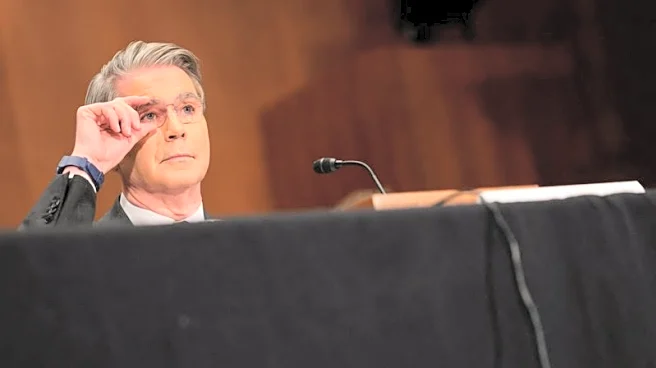
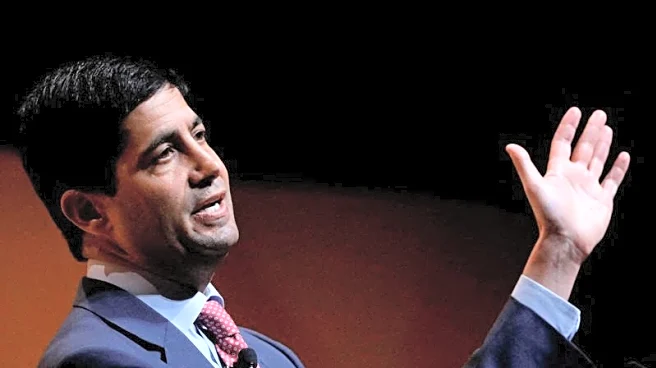
that the list of candidates has been narrowed down to possibly one individual, though he did not disclose the name. The search initially included a range of candidates such as former and current Fed officials, economists, and Wall Street investors. Among the finalists are former Fed Governor Kevin Warsh, current Governor Christopher Waller, National Economic Council chief Kevin Hassett, and BlackRock's Rick Rieder. Trump has expressed a preference for Hassett to remain at the NEC, likely removing him from consideration. The decision comes amid a period of significant tension between Trump and the Federal Reserve, particularly with current Chair Jerome Powell, whom Trump has criticized heavily.
Why It's Important?
The selection of a new Federal Reserve Chair is a critical decision that could influence U.S. monetary policy and economic stability. The Federal Reserve plays a key role in managing inflation, employment, and interest rates, which are vital to the health of the U.S. economy. Trump's decision could lead to shifts in how the Fed approaches these issues, potentially impacting financial markets and economic growth. The ongoing tension between Trump and Powell highlights the political pressures on the Fed, raising concerns about the independence of the institution. The new chair will need to navigate these challenges while maintaining the Fed's credibility and effectiveness.
What's Next?
Once President Trump announces his choice for the new Fed Chair, the nominee will likely undergo a confirmation process. This could involve scrutiny from both political leaders and financial markets, as stakeholders assess the potential impact on monetary policy. The decision may also prompt reactions from international markets, given the global influence of U.S. economic policy. Additionally, the outcome of the Supreme Court hearing on presidential authority over the Fed could further shape the dynamics between the White House and the central bank.