



What's Happening?
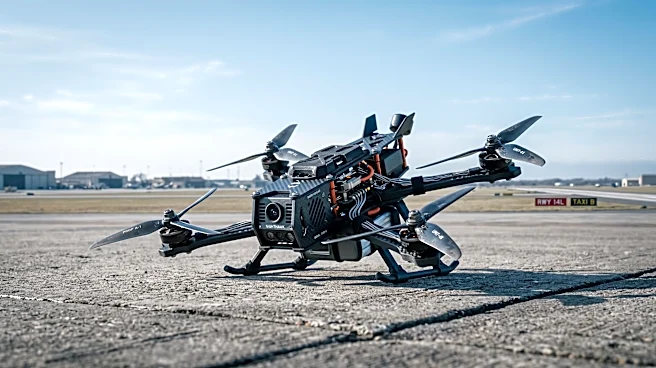
South Korea has launched a new Defense Drone Agency, replacing the former Drone Operations Command, to adapt to the evolving landscape of drone warfare. This reorganization comes as North Korea rapidly develops its own drone arsenal, including attack
drones and stealth-shaped aircraft, with leader Kim Jong-un emphasizing drone superiority. The new agency aims to streamline policy, support drone development and acquisition, and coordinate operations, with the Joint Chiefs of Staff playing a central role. The agency's personnel structure has been adjusted to include a higher percentage of mid- and senior-ranking specialists. This strategic shift is a direct response to the growing threat posed by North Korea's uncrewed aircraft capabilities, which have been showcased in simulated strikes and are potentially enhanced by military ties with Russia.
Why It's Important?
The establishment of the Defense Drone Agency highlights South Korea's urgent need to bolster its defenses against sophisticated drone attacks, particularly given its limited strategic depth and critical infrastructure located within reach of North Korea. The economic imbalance of drone warfare, where a cheap drone can necessitate expensive interceptors, makes effective counter-drone strategies crucial. South Korea's efforts to acquire low-cost combat drones and advance its long-range exploding-drone program, K-LUCAS, are vital for national security. The country's ability to develop and deploy reliable domestic drone systems, and potentially export them, will be a key indicator of its success in this new era of warfare. The agency's performance in translating battlefield needs into dependable equipment and coherent doctrine will determine South Korea's resilience against future drone threats.
What's Next?
The Defense Drone Agency will focus on accelerating the path from commercial innovation to military procurement, potentially through a U.S.-style certification system to allow for the acquisition of vetted commercial drones without delays. There will be an emphasis on developing domestic batteries and motors to reduce reliance on foreign components. South Korea is also exploring layered defense systems, combining jamming, interceptor drones, lasers, and other energy weapons, supported by shared targeting information and realistic joint training. The agency's immediate challenge will be to ensure that new systems are thoroughly tested and proven in the field, addressing past issues with domestically developed drones. The ongoing development of North Korea's drone capabilities, potentially influenced by its experience in the Russia-Ukraine war, will continue to drive South Korea's defense strategies.
Beyond the Headlines
The shift towards drone warfare presents a significant ethical and strategic challenge. The cost-effectiveness of drones for offensive operations compared to the high cost of interception creates a dilemma for defenders. This dynamic could lead to an arms race in drone technology and counter-drone measures, with implications for regional stability. The integration of AI and autonomous capabilities in drones also raises questions about decision-making in combat and the potential for unintended escalation. Furthermore, the reliance on commercial innovation for military applications blurs the lines between civilian and military technology, potentially impacting global supply chains and intellectual property. The need for robust testing and certification processes is paramount to prevent the deployment of unreliable systems that could have severe consequences.