





What's Happening?
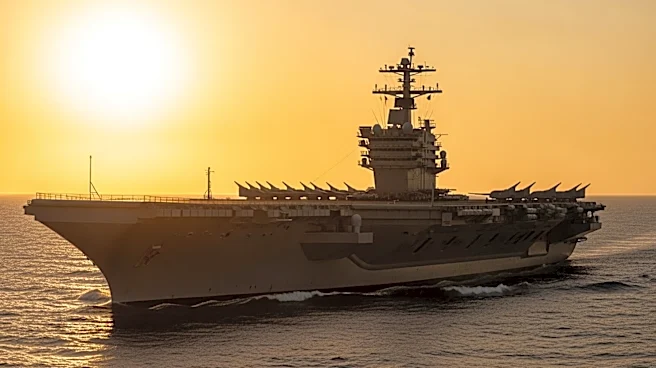
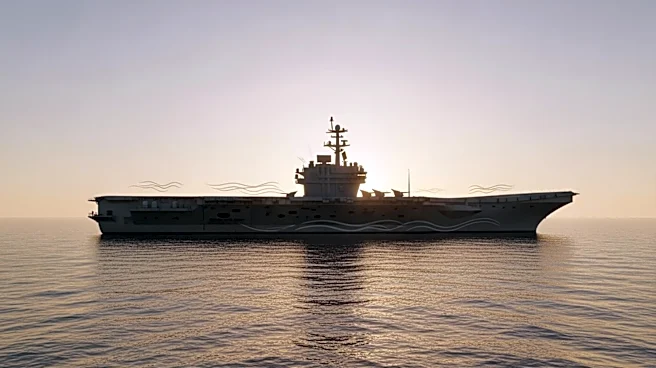
The USS Gerald R. Ford, the largest aircraft carrier in the world, has returned to Norfolk, Virginia, after an 11-month deployment, marking the longest such mission since the Vietnam War. The deployment included support for U.S. military operations in the Iran
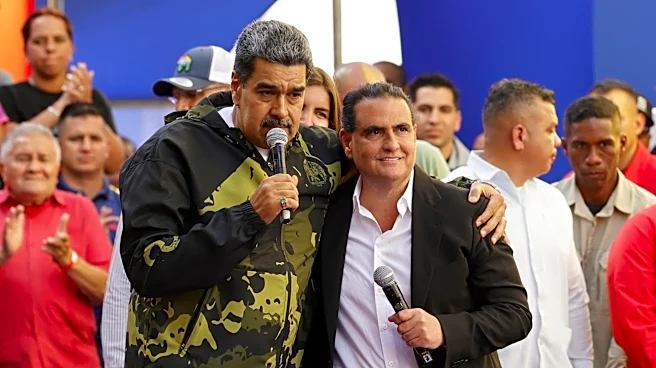
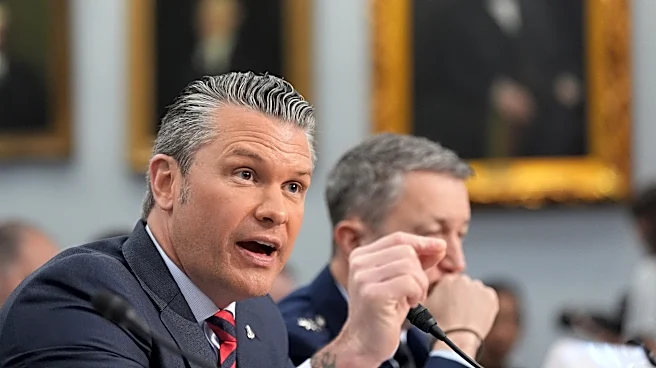
conflict and the capture of Nicolás Maduro, the former president of Venezuela. The carrier, along with two destroyers, docked at Naval Station Norfolk, where Defense Secretary Pete Hegseth praised the crew for their service. The deployment was notable for its duration and the challenges faced, including a noncombat-related fire that required repairs in Crete.
Why It's Important?
The return of the USS Gerald R. Ford highlights the strategic military operations of the U.S. in international conflicts, particularly in the Middle East and Latin America. The deployment underscores the U.S. Navy's capability to project power globally and maintain a presence in critical regions. The extended deployment raises questions about the impact on service members and the strain on naval resources. The mission's success, recognized by a Presidential Unit Citation, reflects the importance of naval power in achieving U.S. foreign policy objectives.
What's Next?
The return of the USS Gerald R. Ford may prompt discussions on the sustainability of long deployments and their effects on personnel and equipment. The Navy might review its deployment strategies to balance operational demands with the well-being of its sailors. Future deployments could see adjustments in duration and support to mitigate the challenges experienced during this mission.