







What's Happening?
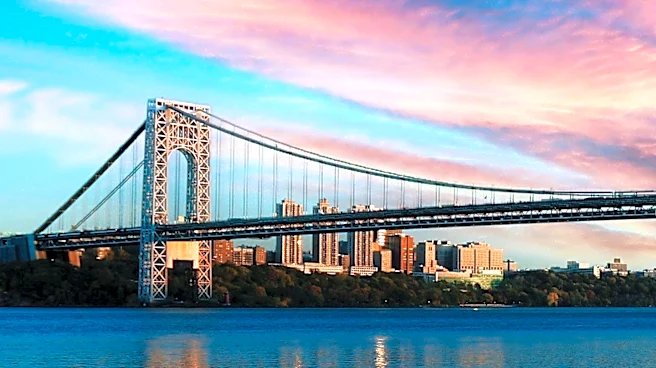
The pedestrian South Walk of the George Washington Bridge reopened on Thursday following extensive renovations. The project included widening sections of the walkway, installing new lighting, implementing security upgrades, and constructing new viewing
platforms that offer vistas of the Hudson River. CBS News New York's Nick Caloway reported on the reopening, highlighting the improvements designed to enhance the experience for pedestrians and cyclists. This renovation aims to improve safety, accessibility, and the overall aesthetic appeal of one of the region's iconic crossings.
Why It's Important?
The reopening of the George Washington Bridge's South Walk is significant for commuters, tourists, and local residents in the New York metropolitan area. The improvements enhance pedestrian and cyclist safety, which is crucial for a structure that sees heavy foot and bike traffic. Wider walkways reduce congestion and improve flow, while new lighting and security upgrades contribute to a safer environment, especially during off-peak hours. The addition of viewing platforms also boosts the bridge's appeal as a recreational and tourist destination, potentially increasing local tourism and economic activity. This project reflects ongoing efforts to modernize critical infrastructure, ensuring it meets contemporary demands for safety, accessibility, and public enjoyment.
What's Next?
With the South Walk now open, pedestrians and cyclists can immediately begin utilizing the enhanced facilities. The Port Authority of New York and New Jersey, which manages the bridge, will likely monitor the usage and impact of the renovations to ensure they meet their intended goals. There may be public feedback mechanisms to gather user experiences. Future plans for the bridge could involve further maintenance or upgrades to other sections, depending on structural assessments and public needs. The successful completion of this project may also inform future infrastructure development strategies for other major crossings in the region, emphasizing the importance of multi-modal access and public amenities.
Beyond the Headlines
Beyond the immediate benefits of improved infrastructure, the renovation of the George Washington Bridge's South Walk speaks to the broader commitment to urban livability and sustainable transportation. By prioritizing pedestrian and cyclist access, the project encourages alternative modes of transport, potentially reducing vehicular traffic and its associated environmental impact. It also underscores the cultural and historical significance of such landmarks, transforming them from mere transit routes into public spaces that offer recreational and aesthetic value. This investment in public infrastructure reflects a growing trend in urban planning to create more walkable and bikeable cities, fostering healthier communities and a more integrated urban experience. The project also highlights the complex engineering and logistical challenges involved in upgrading historic, heavily used structures while minimizing disruption.