






What's Happening?
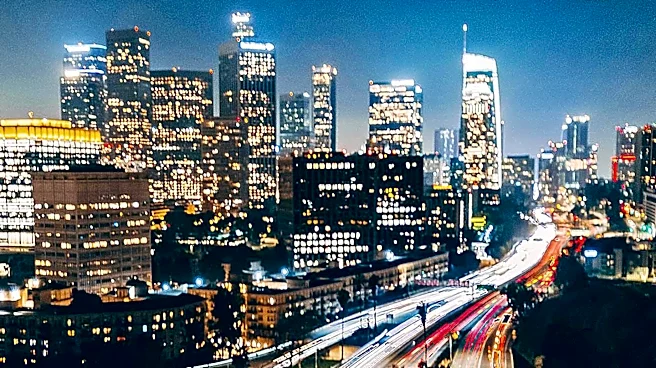
In Los Angeles, the Holocaust Museum LA has unveiled its new Goldrich Cultural Center, designed by Israeli-American architect Hagy Belzberg. This expansion features a unique architectural style that integrates with the surrounding park, creating a seamless
connection between the museum and its environment. The new center includes a hologram theater where visitors can interact with Holocaust survivors, and it houses 25,000 historical items. The expansion was driven by increased visitor demand, particularly from educational institutions, and aims to provide a more comprehensive educational experience about the Holocaust.
Why It's Important?
The expansion of the Holocaust Museum LA is significant as it enhances the educational and cultural landscape of Los Angeles. By incorporating advanced technology like holograms, the museum offers an innovative way to engage with history, ensuring that the stories of Holocaust survivors continue to be told to future generations. This development also reflects a broader commitment to preserving historical memory and educating the public about the Holocaust, which is crucial in combating denial and indifference. The project, supported by significant funding from the state of California and private donors, underscores the importance of cultural institutions in fostering understanding and tolerance.
What's Next?
The new Goldrich Cultural Center is expected to attract even more visitors, including school groups, thereby increasing its educational impact. The museum plans to host various cultural events, lectures, and discussions, further establishing itself as a hub for learning and reflection. As the center continues to develop its programming, it may also inspire other museums to adopt similar interactive technologies to enhance visitor engagement. The ongoing support from the community and government will be crucial in maintaining and expanding the museum's offerings.
Beyond the Headlines
The architectural design of the new center, which blends with the natural landscape, symbolizes the continuity of life and memory. This approach not only enhances the visitor experience but also serves as a metaphor for resilience and hope. The museum's focus on pre-Holocaust Jewish life aims to provide a fuller understanding of the cultural and historical context, highlighting the magnitude of the loss and the richness of the heritage that was nearly destroyed.