





What's Happening?
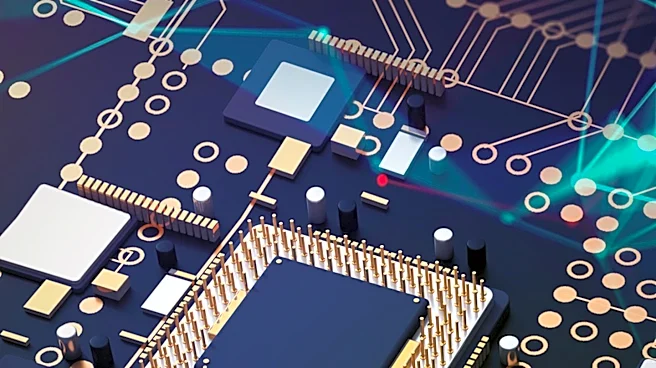
A Korean research team has developed a microfluidic chip designed to predict personalized treatment responses for glioblastoma patients. This innovative chip recreates a patient's own tumor cells along with the surrounding peritumoral vascular environment,
known as the blood–brain tumor barrier (BBTB). Glioblastoma is a highly aggressive brain tumor, challenging to treat due to rapid cancer cell spread and patient-specific tumor characteristics. The brain's natural blood–brain barrier typically blocks harmful substances, but it also impedes anticancer drugs from reaching tumors. In glioblastoma, this vascular barrier changes, and the extent of this change varies among patients, influencing drug efficacy. Traditional treatment response predictions rely on genetic information and biomarkers, which do not account for these patient-specific vascular environments. The new chip addresses this by co-culturing patient-derived glioblastoma cells with brain vascular endothelial cells and astrocytes, precisely mimicking the tumor-brain tissue boundary and accommodating perivascular and immune cells.
Why It's Important?
This development is crucial for advancing personalized medicine in oncology, particularly for aggressive cancers like glioblastoma. The ability to predict individual patient responses to anticancer drugs before administration can significantly improve treatment outcomes and reduce the burden of ineffective therapies. By incorporating the patient-specific vascular environment, the chip offers a more accurate and comprehensive model than current genetic testing methods, which often fail to capture the nuances of drug delivery and interaction within a living system. The study demonstrated that even patients with similar genetic markers (MGMT promoter methylation biomarker) showed varied responses on the chip, aligning with their actual clinical courses. This highlights the critical role of the BBTB in drug efficacy and the limitations of relying solely on genetic information. This technology could lead to more targeted and efficient treatment strategies, minimizing side effects and improving patient quality of life.
What's Next?
The research team plans to validate the predictive performance and reproducibility of this microfluidic chip in a larger patient cohort. If successful, this platform could enable clinicians to test multiple anticancer agents on a chip derived from a patient's own tumor cells, allowing for the selection of the most promising treatment strategy in advance. Beyond personalized treatment selection, the same chip environment could serve as a powerful tool for screening new drug candidates, accelerating the development of novel glioblastoma therapies. The long-term vision is to integrate this technology into routine clinical practice, establishing a preclinical evaluation platform for personalized treatment strategies and new drug development. This would represent a significant leap forward in precision medicine, offering hope for improved outcomes in one of the most challenging cancers.
Beyond the Headlines
The microfluidic chip represents a paradigm shift in cancer research, moving beyond traditional in vitro and in vivo models to create highly personalized and physiologically relevant testing environments. This 'organ-on-a-chip' technology has broader implications for drug discovery and development across various diseases, potentially reducing the reliance on animal testing and accelerating the translation of research into clinical applications. Ethically, it raises questions about the future of drug trials and the potential for highly individualized treatments to become the standard of care, which could impact healthcare costs and accessibility. The ability to precisely model patient-specific disease environments could also lead to a deeper understanding of disease mechanisms and resistance, fostering breakthroughs that were previously unattainable. This technology underscores the growing convergence of engineering, biology, and medicine in addressing complex health challenges.