



What's Happening?
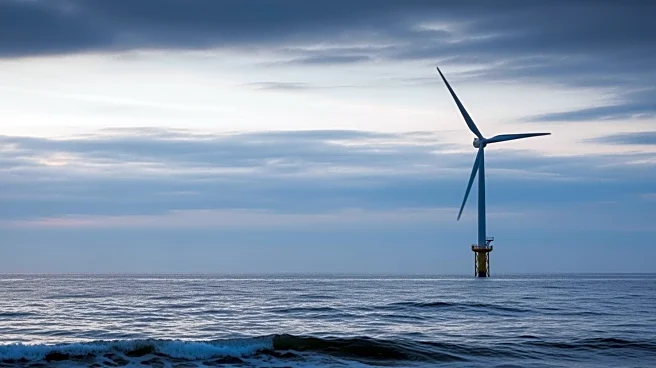
The global offshore wind industry has seen significant growth, with installed capacity surpassing 83 GW by the end of 2024. However, the U.S. sector is facing challenges due to policy reversals under President Trump's administration. On January 20, 2025,
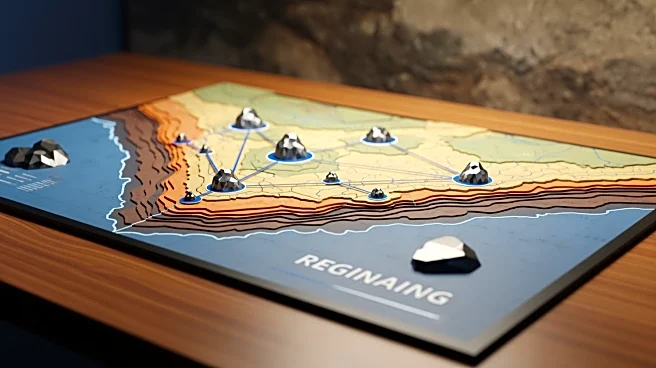
an executive order was signed to halt new offshore wind leasing and review existing leases, effectively freezing the development of five major projects along the East Coast. These projects, with a combined capacity of approximately 5.8 GW, are crucial for the U.S. renewable energy goals. The Department of the Interior cited national security risks, particularly radar interference, as the reason for pausing these projects. This decision has been met with criticism from various stakeholders, including national security experts and environmental groups.
Why It's Important?
The halt in offshore wind development in the U.S. poses significant implications for the country's renewable energy targets and economic interests. The projects affected represent billions of dollars in investment and are vital for diversifying the U.S. energy supply. The pause could lead to increased energy costs and job losses, impacting grid reliability and economic stability. The International Energy Agency has revised its U.S. renewable capacity forecast down by approximately 50% for the 2025-2030 period, highlighting the potential long-term impact of these policy changes. The decision also raises concerns about the U.S.'s ability to meet its climate goals and maintain competitiveness in the global renewable energy market.
What's Next?
Legal challenges to the policy reversals are underway, with Dominion Energy filing a lawsuit against the Department of the Interior's stop-work order. The outcome of these legal battles could determine the future of offshore wind development in the U.S. Additionally, the industry is advocating for policy reforms to address regulatory and political risks, improve auction designs, and streamline permitting processes. The resolution of these issues will be crucial for the U.S. to regain momentum in offshore wind development and achieve its renewable energy objectives.
Beyond the Headlines
The policy reversals highlight the broader issue of regulatory instability in the U.S. energy sector. The decision to halt offshore wind projects reflects a shift in energy policy priorities and underscores the challenges of balancing national security concerns with environmental and economic goals. The situation also emphasizes the need for a coordinated approach to grid planning and infrastructure development to support the growth of renewable energy. As the global offshore wind industry continues to expand, the U.S. must address these structural challenges to remain a competitive player in the market.