
What's Happening?
The recent U.S. military operation in Venezuela, which led to the arrest of Venezuelan President Nicolás Maduro and his wife, has sparked significant discussion about its implications for regional security
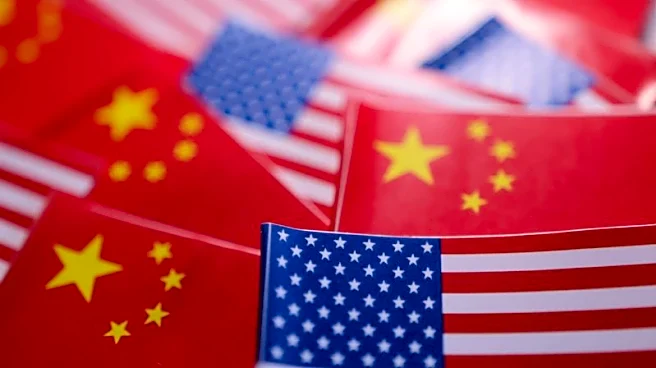
and international relations. The East-West Center, through an interview with Carlos Juarez, highlighted the operation as a reflection of the U.S.'s strategic interests in the Western Hemisphere. This move is seen as part of a broader national security strategy that emphasizes the U.S.'s dominance in the region, reminiscent of historical great power politics. The operation occurred while a Chinese delegation was present in Caracas, underscoring the geopolitical tensions involving major powers like China and Russia, who have vested interests in Latin America.
Why It's Important?
The U.S. action in Venezuela is significant as it underscores the country's intent to maintain its influence in the Western Hemisphere, potentially at the expense of other global powers like China and Russia. This development could lead to a reassessment of alliances and partnerships in Latin America, as countries in the region may seek to diversify their international relations to avoid over-reliance on the U.S. The operation also highlights the ongoing geopolitical struggle for influence in resource-rich regions, with China being a major economic player in Latin America. The arrest of Maduro could further destabilize the region, affecting economic and political dynamics, and potentially leading to shifts in how Latin American countries engage with global powers.
What's Next?
The future of U.S.-Venezuela relations remains uncertain, with potential implications for the broader Latin American region. The large Venezuelan diaspora, displaced over the past two decades, may face challenges in returning to a stable and governable homeland. The U.S.'s actions could prompt Latin American countries to reconsider their diplomatic and economic ties, possibly leading to stronger connections with non-U.S. powers. This situation may also influence the U.S.'s future foreign policy decisions in the region, as it navigates the complex interplay of maintaining influence while addressing the concerns of neighboring countries.
Beyond the Headlines
The U.S. military action in Venezuela raises ethical and legal questions about sovereignty and the use of force in international relations. The operation could set a precedent for future interventions, potentially leading to increased tensions and conflicts in the region. Additionally, the move may influence public opinion in Latin America, where historical memories of U.S. interventions could fuel anti-American sentiment. The long-term impact on U.S.-Latin American relations will depend on how the U.S. balances its strategic interests with respect for regional autonomy and cooperation.