
What's Happening?
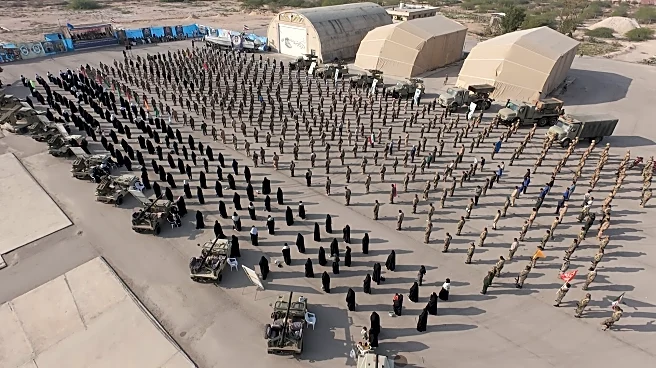
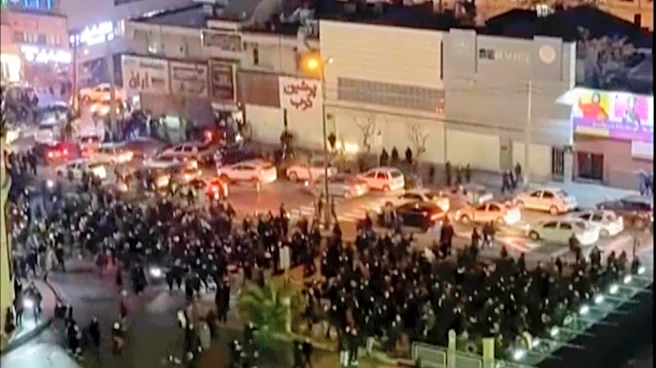
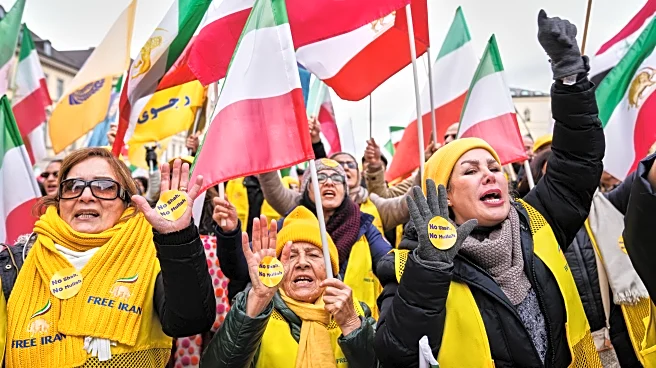
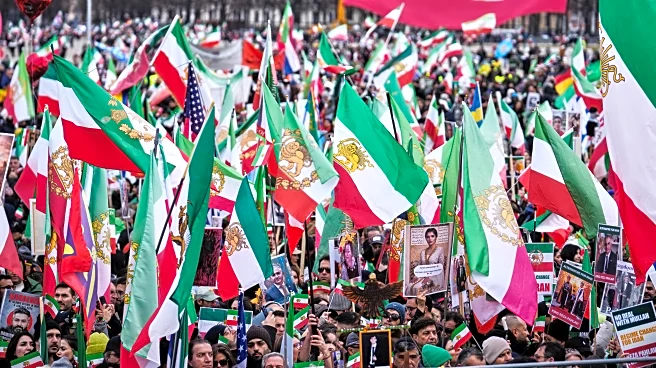
In Iran, protests continue as citizens express dissatisfaction with the government, marking the 47th anniversary of the 1979 Revolution. Despite severe economic challenges, including inflation nearing 48% and a depreciated national currency, protesters
are determined to return to the streets. The protests are fueled by the government's violent crackdown on demonstrators in January, which resulted in numerous casualties. Many Iranians, including students and workers, are participating in strikes and protests, demanding change. The government has attempted to normalize the situation through celebrations, but opposition remains strong, with chants against the regime echoing throughout Tehran and other cities.
Why It's Important?
The ongoing protests in Iran highlight significant discontent with the current regime, which could lead to further instability in the region. The economic struggles faced by the Iranian population, coupled with the government's harsh response to dissent, have intensified calls for change. This unrest could impact international relations, particularly with countries like the U.S. and Israel, which have expressed concerns over Iran's actions. The situation also underscores the broader struggle for human rights and freedom in authoritarian regimes, drawing attention from global human rights organizations and foreign governments.
What's Next?
As the protests continue, the Iranian government faces pressure to address the demands of its citizens. The upcoming memorials for those killed during the January crackdown could serve as a catalyst for further demonstrations. Internationally, there may be increased calls for intervention or support for the protesters. The Iranian leadership's response to these events will be crucial in determining the country's future political landscape and its relations with the international community.