



What's Happening?
South Korea has announced a significant shift in its energy policy, aiming to reduce its reliance on coal power as part of its commitment to lower carbon emissions. This move is part of a broader strategy to address climate change, with plans to retire
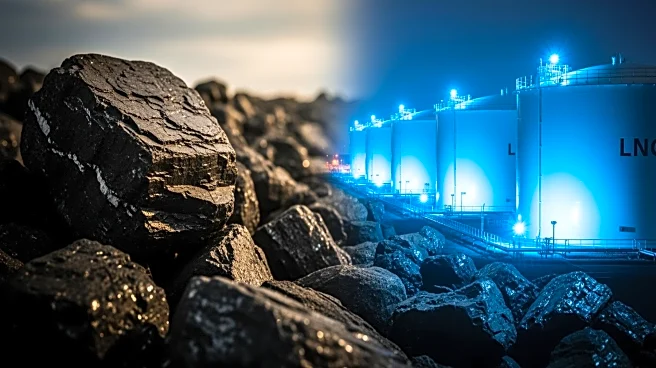
most coal-fired power plants by 2040 and cut carbon emissions by at least half by 2035. However, this ambition is complicated by trade agreements with the Trump administration, which include increased imports of U.S. liquefied natural gas (LNG). While LNG burns cleaner than coal, it still contributes to greenhouse gas emissions, particularly methane. The South Korean government is negotiating a deal to import between 3 to 9 million tons of American LNG annually, which could potentially conflict with its climate goals.
Why It's Important?
The tension between South Korea's climate commitments and its trade agreements with the U.S. highlights the complex interplay between economic and environmental policies. The increased import of U.S. LNG could undermine South Korea's efforts to transition to renewable energy, potentially locking the country into a fossil fuel-dependent future. This situation underscores the challenges nations face in balancing economic growth with environmental sustainability. The outcome of these negotiations could have significant implications for global energy markets and climate policies, influencing how other countries approach similar dilemmas.
What's Next?
South Korea's energy strategy will likely continue to evolve as it seeks to reconcile its climate goals with economic agreements. The government may need to explore alternative energy sources and technologies to offset the environmental impact of increased LNG imports. Additionally, the ongoing negotiations with the U.S. could lead to adjustments in trade terms to better align with South Korea's environmental objectives. The international community will be watching closely, as South Korea's decisions could set a precedent for other countries facing similar challenges.
Beyond the Headlines
This development raises broader questions about the role of international trade in shaping national energy policies. The reliance on fossil fuels, even in cleaner forms like LNG, poses ethical and environmental challenges that require careful consideration. South Korea's situation illustrates the need for integrated approaches that consider both economic and environmental factors. The country's efforts to increase renewable energy capacity, such as offshore wind power, will be crucial in achieving a sustainable energy future.