



What's Happening?
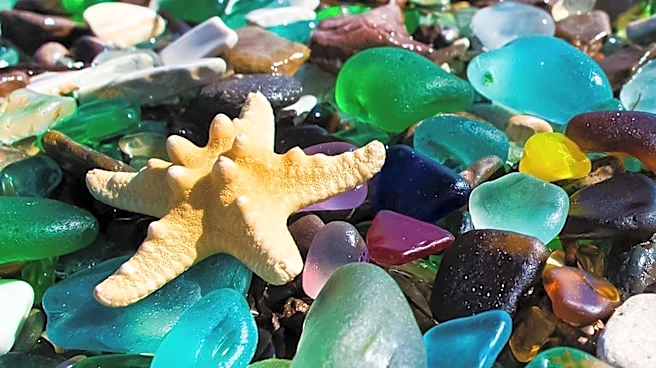
Two college students in New Orleans, Franziska Trautmann and Max Steitz, founded Glass Half Full, a company that upcycles discarded glass into sand for coastal restoration. New Orleans previously lacked an active glass recycling system, leading millions
of pounds of glass bottles from bars, breweries, and wineries to be sent to landfills. The city's regular recycling bins only accepted paper and plastic, and a single glass bottle could contaminate an entire bin, redirecting it to a landfill. Trautmann and Steitz began their operation in a fraternity backyard with a small glass-crushing machine, which has since scaled up to process thousands of bottles daily. This initiative addresses both the waste management problem and the critical issue of Louisiana's rapidly disappearing coastline, which loses up to 75 square kilometers of wetlands annually due to erosion and human activities. The upcycled glass sand has been tested and deemed safe for environmental use, finding a powerful second life in rebuilding wetlands and barrier islands.
Why It's Important?
This initiative is crucial for addressing environmental challenges in the U.S., particularly in coastal regions like Louisiana. The state's wetlands and barrier islands serve as vital buffer zones against coastal flooding, especially during hurricane season, and are essential for sustaining drinkable water, supporting commercial fishing, and protecting vulnerable wildlife systems. The loss of these natural barriers increases the vulnerability of communities to natural disasters and has significant economic and ecological consequences. By diverting millions of pounds of glass from landfills, Glass Half Full reduces waste and its associated environmental impact, such as greenhouse gas emissions and land pollution. Furthermore, the project provides a sustainable and environmentally safe material for coastal restoration, offering a practical solution to a pressing environmental crisis. This model demonstrates how local innovation can tackle complex environmental issues, creating both ecological and economic benefits.
What's Next?
Glass Half Full has already deployed its glass sand in several restoration projects, including collaborations with the Pointe-au-Chien Indian Tribe and coastal wildlife refuges along Lake Pontchartrain. The company also produces other alternative products, such as sandbag material, indicating a potential for diversification and broader application of their upcycled materials. The success of this student-led initiative could inspire similar projects in other U.S. cities facing waste management and environmental degradation challenges. Continued research and development into the applications of upcycled glass could lead to further innovations in sustainable infrastructure and environmental protection. The project's growth will likely involve expanding its collection network, increasing processing capacity, and seeking more partnerships with environmental organizations and government agencies for larger-scale restoration efforts.
Beyond the Headlines
The Glass Half Full project highlights a broader shift towards circular economy models in the U.S., where waste is viewed as a resource rather than a disposable item. This approach challenges the traditional 'take-make-dispose' cycle and promotes creative reuse and repurposing of materials. The initiative also underscores the power of grassroots efforts and youth engagement in driving environmental change. It demonstrates that significant environmental impact can be achieved through local, community-driven solutions, even in the face of systemic challenges like inadequate recycling infrastructure. Ethically, the project emphasizes environmental stewardship and the responsibility to protect natural resources for future generations. Culturally, it fosters a sense of community involvement and innovation in addressing environmental issues, moving beyond passive awareness to active problem-solving.