






What's Happening?
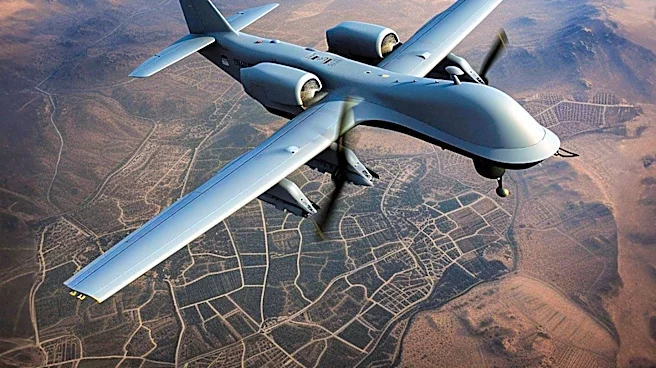
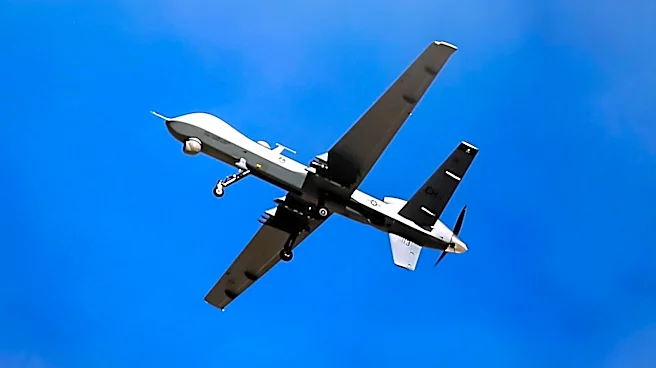
The U.S. Navy is currently evaluating the MQ-9B SeaGuardian, an uncrewed aircraft system developed by General Atomics Aeronautical Systems (GA-ASI), for potential integration into its maritime patrol and reconnaissance capabilities. This assessment includes
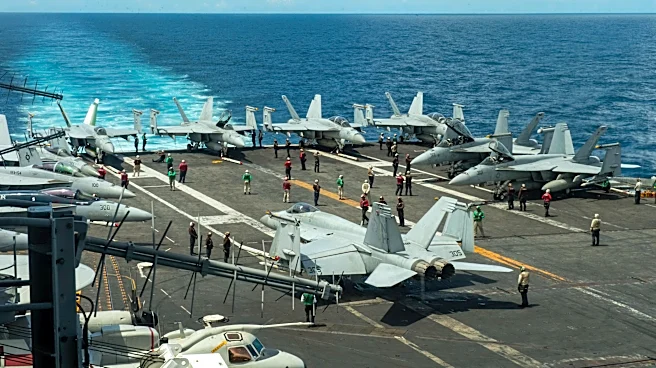
presentations to Navy leaders and tacticians at Naval Air Station Whidbey Island, Washington, and an ongoing capability assessment for the 7th Fleet. The SeaGuardian, a maritime variant of the MQ-9B, is being utilized under a Company-Owned, Company-Operated contract to support the 7th Fleet's evaluation. This initiative was requested by the Commander, Patrol and Reconnaissance Group, for the Maritime Patrol and Reconnaissance Force's Commander's Operational Group, which convenes senior leaders, tacticians, and industry representatives to review naval aviation capabilities and anti-submarine warfare procedures. The aircraft has previously participated in Navy activities such as Northern Edge and Integrated Battle Problem, as well as carrier pre-deployment workups.
Why It's Important?
The evaluation of the MQ-9B SeaGuardian signifies a strategic move by the U.S. Navy to enhance its long-endurance surveillance and anti-submarine warfare (ASW) capabilities through uncrewed systems. The SeaGuardian's ability to fly for over 30 hours using satellite links and its configuration with removable maritime sensors, including wide-area maritime radar, automatic identification systems, and electronic support measures, could significantly extend the Navy's reach and persistence in critical maritime domains. Its self-contained ASW mission kit, featuring an open architecture for sonobuoy management and dispensing, allows for the deployment and control of up to 80 G-size sonobuoys from a single remotely piloted aircraft. This capability is crucial for detecting and tracking submarines over vast areas, either as a standalone asset or in conjunction with crewed aircraft, thereby bolstering national security and projecting naval power more efficiently. The potential adoption of such technology could lead to a more cost-effective and less risk-intensive approach to maritime surveillance and ASW operations.
What's Next?
The ongoing evaluation of the MQ-9B SeaGuardian is expected to continue, with further assessments of its performance in various naval activities. Should the evaluation prove successful, the U.S. Navy may proceed with the acquisition and broader integration of the SeaGuardian into its fleet. This could involve developing new operational doctrines and training programs for Navy personnel to effectively utilize the uncrewed system for missions such as anti-surface warfare, airborne mine countermeasures, long-range intelligence gathering, and over-the-horizon targeting. Furthermore, the SeaGuardian's versatility for humanitarian assistance, disaster relief, and law enforcement missions suggests potential for its deployment in a wider range of scenarios beyond traditional combat roles. The success of this evaluation could also influence future investments in uncrewed aerial systems across other branches of the U.S. military, driving innovation in defense technology and operational strategies.
Beyond the Headlines
The potential integration of the MQ-9B SeaGuardian into the U.S. Navy's operations represents a broader shift towards autonomous and uncrewed systems in modern warfare. This trend raises important ethical and legal considerations regarding the role of artificial intelligence in decision-making processes, particularly in combat situations. The increased reliance on long-endurance uncrewed aircraft for surveillance and ASW could also lead to a re-evaluation of naval personnel roles, potentially shifting focus from direct operational tasks to oversight, data analysis, and system maintenance. Moreover, the ability of the SeaGuardian to operate in civil airspace and its potential for dual-use applications in law enforcement and disaster response highlight the evolving nature of military technology and its intersection with civilian domains. This development could also spur further international competition in the development and deployment of advanced uncrewed maritime systems, influencing global naval strategies and defense spending.