



What's Happening?
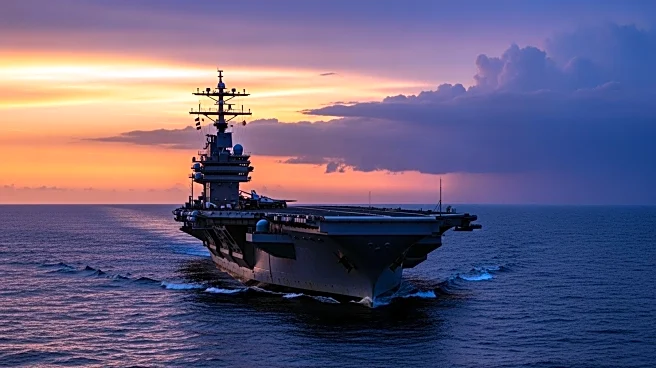
The US aircraft carrier 'Abraham Lincoln' is en route to the Middle East, redirected from the South China Sea, following President Trump's recent considerations of a military strike against Iran. This move comes amid Iran's plans to execute protesters,
which has heightened tensions in the region. President Trump has refrained from confirming whether the US would strike Iran if these executions proceed, stating that discussing such actions would be 'foolish.' Meanwhile, Israeli Prime Minister Benjamin Netanyahu has convened a security meeting to discuss regional security issues, including Iran. The US is also considering bolstering its air defense systems in the Middle East as part of its strategic response.
Why It's Important?
The deployment of the 'Abraham Lincoln' to the Middle East underscores the escalating tensions between the US and Iran, particularly concerning Iran's internal unrest and nuclear activities. This move signals a potential shift in US military posture in the region, which could impact geopolitical stability. The situation is further complicated by Iran's internal protests and the international community's response to human rights violations. The US's strategic decisions in this context could influence its relations with Middle Eastern allies and adversaries, potentially affecting global oil markets and regional security dynamics.
What's Next?
As the 'Abraham Lincoln' approaches the Middle East, the international community will closely monitor the US's next steps, particularly any military actions or diplomatic engagements with Iran. The potential for increased military presence in the region could lead to further diplomatic negotiations or escalations. Additionally, the US's decision on reinforcing air defense systems may prompt reactions from regional powers and influence future security collaborations. The unfolding situation will likely impact US foreign policy and its approach to Middle Eastern affairs.