





What's Happening?
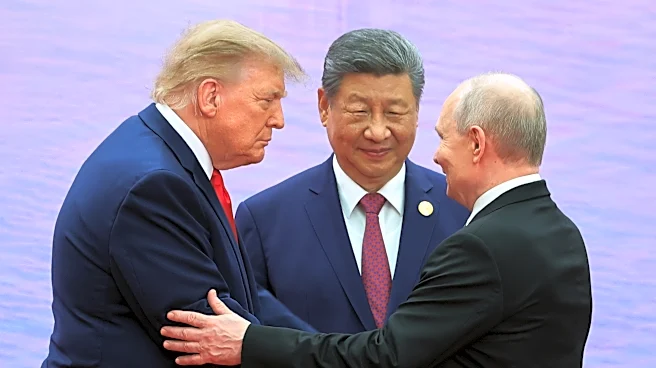
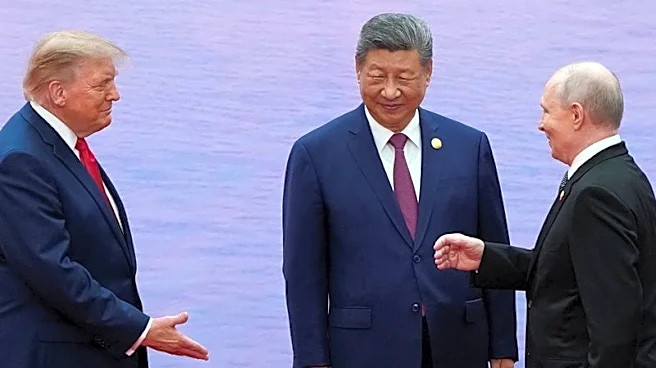
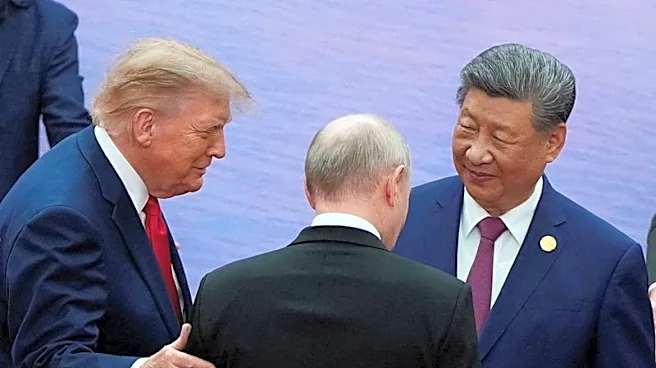
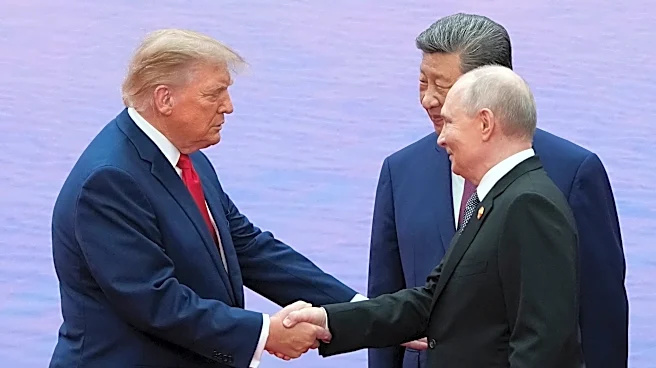
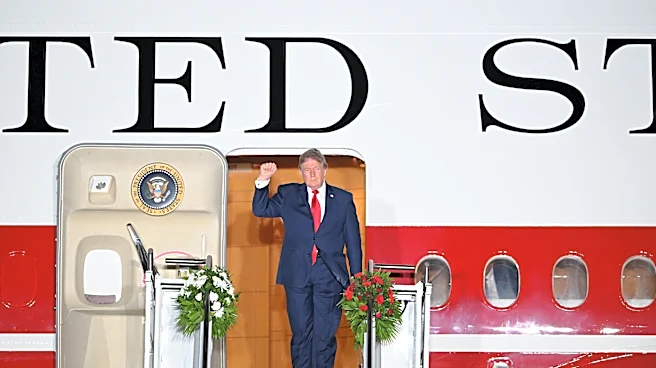
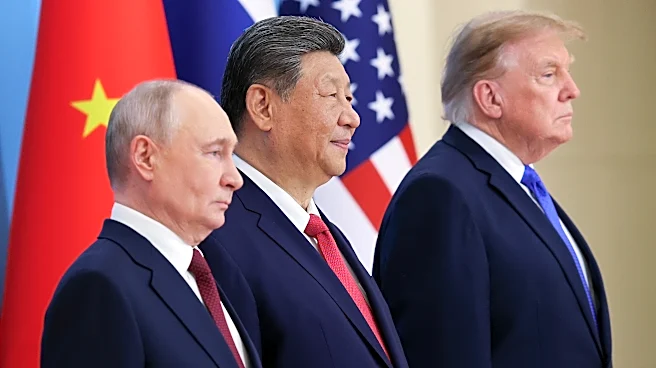
President Trump is scheduled to hold a concurrent meeting with Chinese leader Xi Jinping and Russian President Vladimir Putin in Shenzhen, China. This high-level diplomatic engagement is taking place amidst ongoing international discussions and follows
recent trilateral peace negotiations involving Ukrainian, U.S., and Russian teams in Abu Dhabi. Ukrainian President Volodymyr Zelensky has stated that U.S. representatives at the Coalition of the Willing meeting have promised to keep him updated on the outcomes of President Trump's meeting in Shenzhen. The meeting's agenda is expected to cover a range of geopolitical issues, with particular attention to the ongoing conflict in Ukraine and broader international stability. President Trump has expressed hope that Russian President Vladimir Putin, and the other side, would like to see an end to the war in Ukraine.
Why It's Important?
This meeting is significant due to the direct engagement between the leaders of the United States, China, and Russia, three of the world's most influential powers. Such a summit could have profound implications for global geopolitics, particularly concerning the conflict in Ukraine. Direct dialogue between President Trump, President Xi, and President Putin offers a potential avenue for de-escalation or a shift in diplomatic strategies regarding the conflict. The involvement of China, a key global player, alongside the U.S. and Russia, could introduce new dynamics into peace efforts. The outcomes of these discussions could influence international sanctions, aid packages, and future peace negotiations, impacting global economic stability and security alliances. The meeting also underscores the complex web of international relations and the ongoing efforts to navigate geopolitical tensions through high-level diplomacy.
What's Next?
The immediate next steps will involve close monitoring of any joint statements or individual remarks from the leaders following their meeting in Shenzhen. The international community, particularly Ukraine and its allies, will be keenly awaiting updates and potential policy shifts that may emerge. Further diplomatic engagements, possibly building on any agreements or understandings reached, could follow. The meeting's impact on the ongoing conflict in Ukraine will be a primary focus, with potential implications for future peace talks, humanitarian efforts, and military strategies. Reactions from other global powers and international organizations will also be crucial in shaping the post-summit landscape. The discussions could also set the stage for future multilateral or bilateral meetings aimed at addressing broader global challenges.
Beyond the Headlines
This trilateral meeting goes beyond immediate conflict resolution, touching upon the broader geopolitical landscape and the evolving balance of power. It highlights the complex interplay of economic interests, national security concerns, and ideological differences among these major global actors. The summit could signal a recalibration of international alliances or a shift in diplomatic approaches to global crises. The very act of these three leaders meeting concurrently suggests a recognition of their interconnected roles in shaping world events. It also raises questions about the future of multilateralism and the potential for new frameworks of international cooperation or competition. The discussions could also indirectly influence global trade relations, technological competition, and efforts to address climate change, as these issues are often intertwined with geopolitical stability.