





What's Happening?
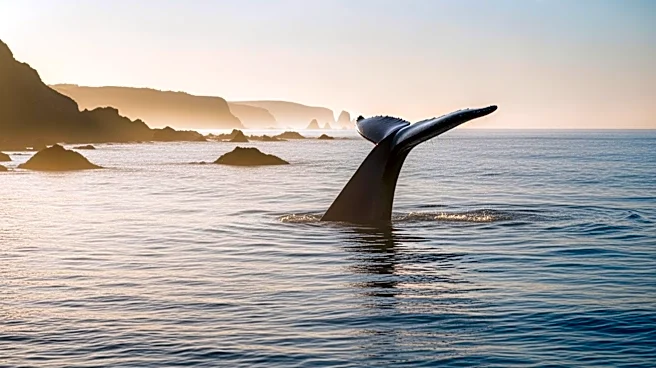
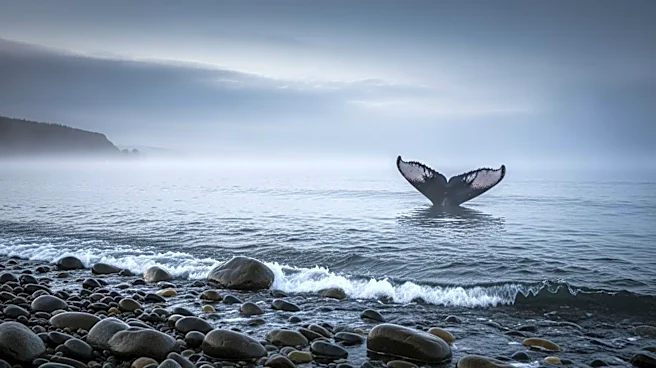
A humpback whale, nicknamed Timmy, is stranded in the shallow waters of the Baltic Sea near Wismar, Germany. The whale, far from its natural habitat in the Atlantic Ocean, has been in distress since it was first spotted on March 3. Despite multiple rescue
attempts, including efforts to guide it back to deeper waters using police boats and inflatable boats, the whale remains in the Baltic Sea. Timmy is suffering from a skin condition due to the low salt content of the water and is showing signs of severe stress and illness. The situation has garnered significant public attention, with local media providing livestreams and activists staging protests. Experts are divided on whether continued rescue attempts are beneficial or if they are causing more harm to the whale.
Why It's Important?
The plight of Timmy the whale highlights the challenges faced by marine life when they stray from their natural habitats. The situation underscores the complexities involved in wildlife rescue operations, where human intervention can sometimes exacerbate the stress on the animal. The public's intense interest in Timmy's fate reflects a broader concern for wildlife conservation and the ethical considerations of human involvement in natural processes. The case also raises questions about the effectiveness and ethical implications of rescue efforts, as experts debate whether it is more humane to allow the whale to die naturally or to continue attempts to save it.
What's Next?
As the whale continues to struggle, experts and authorities are considering the next steps. Some believe that further attempts to guide the whale back to the North Sea may be futile and could cause additional stress. The situation may prompt discussions among conservationists and policymakers about best practices for handling similar incidents in the future. The public and media attention may also influence future wildlife rescue policies and the allocation of resources for such efforts.
Beyond the Headlines
The incident with Timmy the whale may lead to a deeper examination of human interactions with marine life and the impact of environmental changes on animal behavior. It highlights the need for increased awareness and education about marine ecosystems and the potential consequences of human activities on wildlife. The ethical debate surrounding the rescue efforts could influence future conservation strategies and the development of guidelines for intervening in natural processes.