
What's Happening?
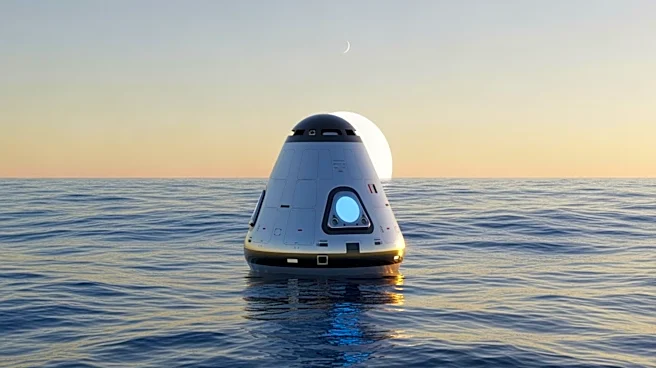
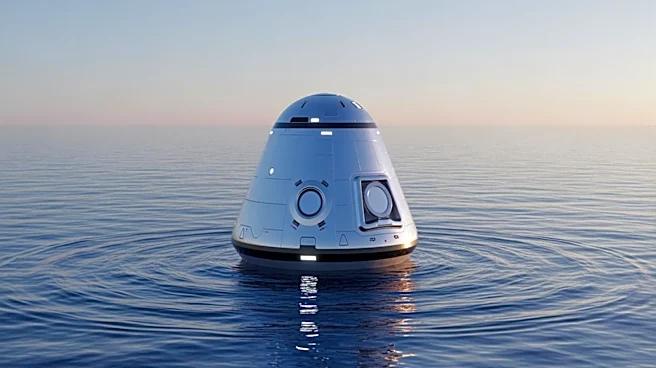
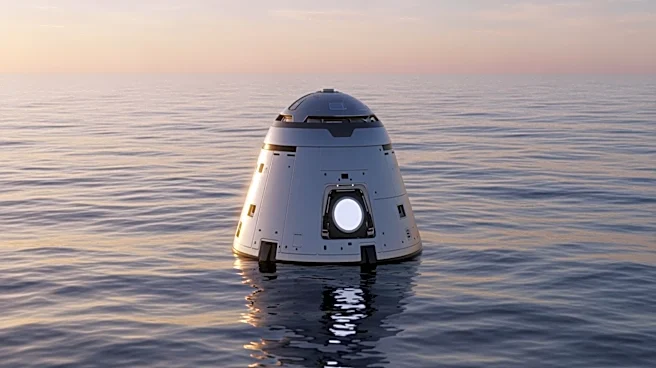
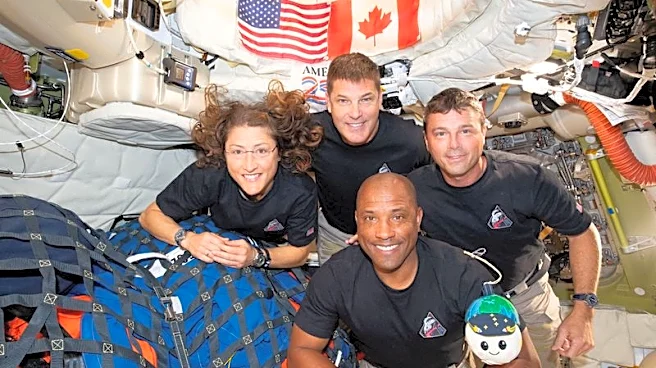
The Artemis II crew, consisting of Reid Wiseman, Victor Glover, Christina Koch, and Jeremy Hansen, successfully returned to Earth after a groundbreaking 10-day mission around the Moon. The splashdown in the Pacific
Ocean near San Diego was broadcasted on Jumbotrons across the nation, capturing the attention of viewers in stadiums and public spaces. The mission set a new record for the farthest space flight by humans, providing valuable data on the Orion spacecraft's systems, including life support and maneuverability. The mission also featured the first toilet to orbit the Moon, highlighting the practical challenges of long-duration space travel.
Why It's Important?
The Artemis II mission represents a pivotal step in NASA's efforts to resume human exploration of the Moon. By successfully testing the Orion spacecraft's capabilities, the mission lays the groundwork for future lunar landings and extended missions. The public engagement and widespread interest in the splashdown underscore the mission's role in rekindling enthusiasm for space exploration. The Artemis program aims to build on the legacy of the Apollo missions, inspiring scientific advancements and international collaboration in space.
What's Next?
Following the success of Artemis II, NASA is gearing up for Artemis III, which is expected to launch next year. This mission will focus on testing equipment and procedures necessary for a lunar landing. The Artemis program's long-term goal is to establish a sustainable human presence on the Moon, with Artemis IV planned for 2028. NASA will continue to refine spacecraft systems and address technical challenges to ensure the success of future missions.