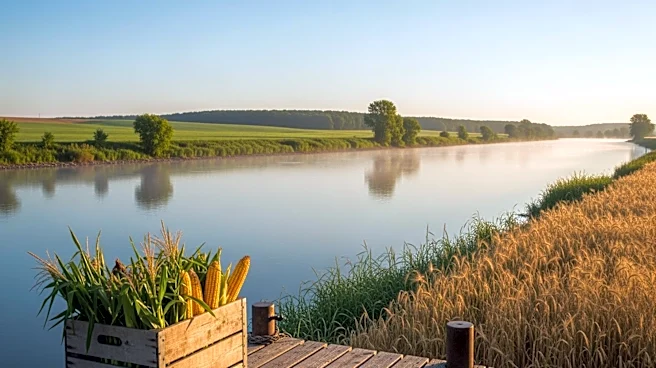








What's Happening?
The Ohio River, the third largest river in the United States by discharge volume, has been a crucial component in the development of American agriculture and commerce. Stretching 981 miles from Pittsburgh to its confluence with the Mississippi River, the Ohio River has historically
served as a major transportation route for agricultural goods. Before the advent of modern transportation, the river facilitated the movement of grain, livestock, and timber, connecting rural America to expanding urban markets. The river's ancient origins have contributed to the fertile soils in its basin, making the Midwest one of the most productive farming regions globally. The river flows through or along the borders of six states and its basin covers portions of 14 states, supporting agriculture on millions of acres.
Why It's Important?
The Ohio River's role in agriculture underscores its significance in the economic development of the United States. By providing a transportation route for agricultural products, the river has historically enabled the growth of farming communities and the expansion of markets. The fertile soils in the river basin have supported extensive agricultural activities, contributing to the Midwest's reputation as a major agricultural hub. The river also supplies drinking water to millions, highlighting its importance in public health and environmental sustainability. Protecting the river's water quality is crucial for maintaining its role in agriculture and as a water source, emphasizing the need for conservation efforts and responsible land management.