





What's Happening?
A new analysis by the European Parliamentary Research Service (EPRS), updated on October 26, 2026, reveals significant weaknesses in Europe's ability to detect small drones, identify perpetrators of suspected sabotage, and coordinate responses to hybrid
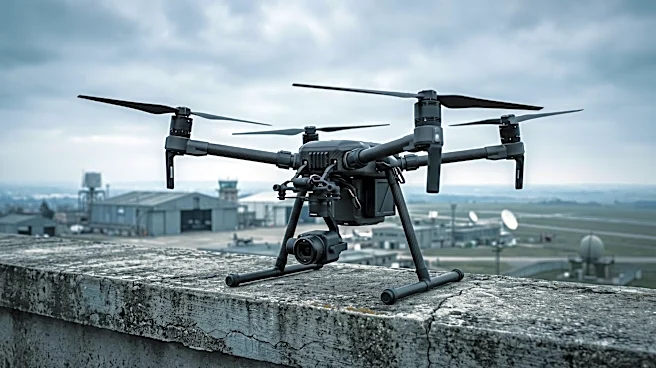
threats. The briefing, titled 'Hybrid Warfare: A Test for Europe's Defences,' examines how drone incursions, cyberattacks, infrastructure sabotage, and information manipulation are being combined to pressure European governments without triggering conventional military conflict. Researchers Linda Tóthová and Laura Zghibarta highlight persistent challenges in threat detection, intelligence attribution, and fragmented responsibilities among national and European authorities. At least 16 NATO member states have reported drone airspace violations or discovered drone remnants in the past two years, often near military facilities, airports, and critical infrastructure. The report notes that traditional air defense systems are ill-equipped to handle inexpensive drones, posing a different operational challenge in determining whether incidents are criminal, reconnaissance, or part of a coordinated hostile operation. Poland recently announced the identification of a Russian GRU unit allegedly involved in hybrid operations across Europe, though details remain undisclosed.
Why It's Important?
This report underscores a critical vulnerability for European security, with direct implications for U.S. and NATO defense strategies. The inability to effectively detect and attribute drone incursions and other hybrid threats creates an asymmetric advantage for adversaries, potentially allowing for significant disruption without direct military confrontation. The financial burden of responding to inexpensive drones with costly interceptors also poses a challenge. For U.S. defense industries and intelligence agencies, these findings highlight the need for enhanced collaboration with European partners on counter-drone technologies, intelligence sharing, and coordinated defense protocols. The report's emphasis on connecting seemingly unrelated security incidents into a broader strategic picture is crucial for understanding evolving threat landscapes. Furthermore, the threats to military production facilities and logistics networks, particularly those supporting Ukraine, could impact the supply chains and operational capabilities of U.S. and allied forces.
What's Next?
The European Union is implementing new initiatives to bolster its defenses against these hybrid threats. The European Drone Defence Initiative (EDDI) aims to establish a multilayered architecture, including surveillance sensors, electronic warfare systems, and interception drones, with initial deployment targeted for late 2026 and full operation by late 2027. The European Commission has also allocated an additional €130 million in October 2026 for counter-drone capabilities under the Border Management and Visa Instrument, bringing total EU financing for surveillance and counter-drone technology to over €500 million. These investments are expected to generate demand for radar systems, electronic warfare technologies, command-and-control software, and intelligence analysis from European manufacturers. However, the report cautions that deploying more sensors alone will not resolve the challenges of attributing hostile operations or coordinating decisions among national authorities, indicating a continued need for improved information sharing and legal coordination.
Beyond the Headlines
The EPRS briefing signals a fundamental shift in how European security risks are assessed, moving beyond traditional military threats to encompass a complex web of digital and physical aggressions. This evolution demands that defense strategies integrate intelligence capabilities to identify hostile networks, understand their intentions, and connect events across various domains. For defense manufacturers, this means a heightened focus on protecting employees, facilities, sensitive technologies, and international supply chains from espionage and sabotage. The increasing overlap between cybercriminals, hacktivists, and state-linked actors, using similar infrastructure and attack methods, complicates attribution and necessitates a more integrated approach to cybersecurity and geopolitical intelligence. The report implicitly calls for a re-evaluation of international legal frameworks and cooperation mechanisms to address these ambiguous and often deniable forms of aggression, which blur the lines between peace and conflict.