




What's Happening?
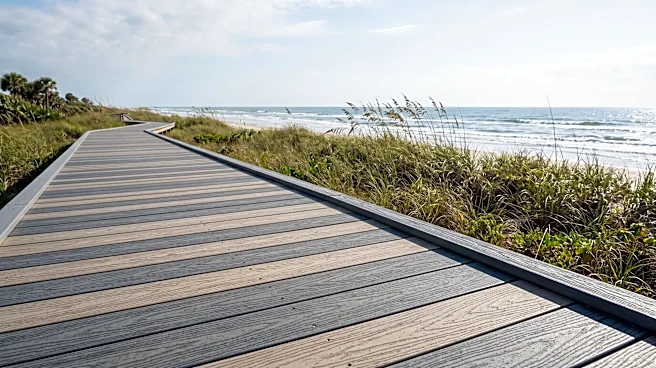
Crews in New Smyrna Beach, Florida, have begun replacing the aging wooden boardwalks at Grayce K. Barck North Beach Community Park with new recycled composite decking. The project, which started on Monday, is anticipated to take approximately two weeks
to complete. According to New Smyrna Beach Public Information Officer Phillip Veski, the previous wooden boardwalks suffered from issues such as wood rot and splintering. The new composite material is expected to mitigate these problems, reduce splinters, and remain cooler during summer months. The boardwalks serve as a connection between North Atlantic Avenue, the east parking lot, and the park's two covered picnic pavilions. During the construction period, beach access via the dune walkover will remain open to the public.
Why It's Important?
This initiative is important for several reasons, primarily focusing on public safety, environmental sustainability, and long-term cost efficiency for the city. The replacement of splintering and rotting wooden boardwalks directly addresses safety concerns for park visitors, reducing the risk of injuries. The use of recycled composite decking highlights a commitment to environmental sustainability by repurposing materials and reducing the demand for new timber. From an economic perspective, the new material is projected to be more durable and require less maintenance than wood, leading to significant cost savings for the city of New Smyrna Beach over time. This project serves as a practical example of how municipalities can invest in infrastructure improvements that benefit both their residents and the environment, while also demonstrating fiscal responsibility through reduced maintenance needs.
What's Next?
The replacement work on the boardwalks is expected to conclude within two weeks from its start date. Upon completion, residents and visitors to Grayce K. Barck North Beach Community Park will benefit from safer, more durable, and environmentally friendly boardwalks. The city will likely monitor the performance of the new composite decking to assess its longevity and maintenance requirements, potentially influencing future infrastructure projects within New Smyrna Beach. This successful implementation could also serve as a model for other coastal communities facing similar challenges with aging wooden structures, encouraging a broader adoption of recycled composite materials for public amenities. The continued open access to the beach via the dune walkover during construction minimizes disruption to public enjoyment of the park.
Beyond the Headlines
Beyond the immediate benefits of improved safety and aesthetics, this project reflects a broader trend in urban planning and public infrastructure towards sustainable and resilient materials. The choice of recycled composite decking underscores a growing awareness of environmental impact and the circular economy, where waste materials are transformed into valuable resources. This shift can influence public perception and encourage residents to consider sustainable choices in their own lives. Furthermore, the reduced maintenance burden on city resources allows for reallocation of funds and personnel to other critical community needs, fostering overall civic improvement. This seemingly small infrastructure upgrade contributes to a larger narrative of responsible governance and environmental stewardship in coastal communities.