







What's Happening?
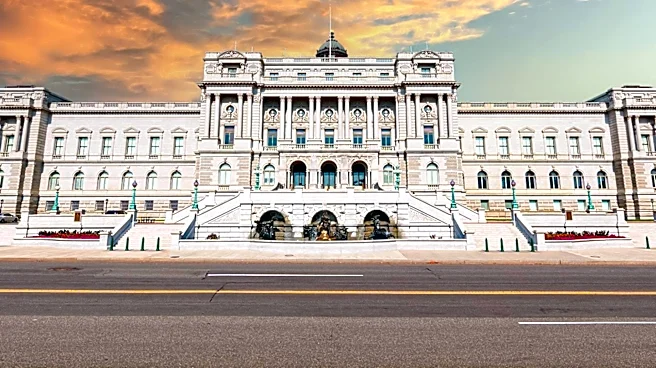
The Library of Congress, through its 'In Custodia Legis' blog, has featured Thomas Nugent, an 18th-century travel writer and antiquarian. Nugent is recognized for his significant role in translating books that influenced public opinion in colonial America,
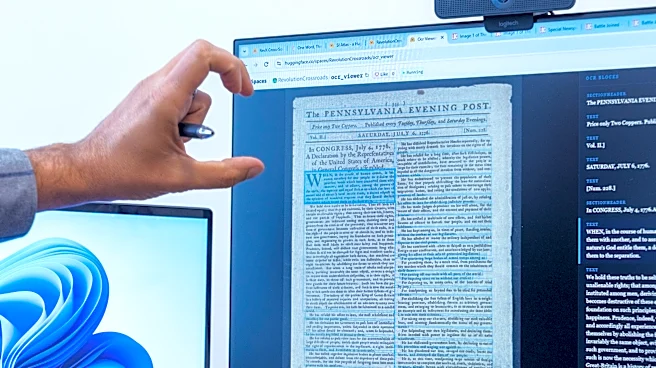
contributing to the revolutionary sentiment. One specific work highlighted is Nugent's translation of Jean Jacques Burlamaqui's 'Principles of Natural Law.' This initiative by the Library of Congress underscores its commitment to preserving and sharing historical materials that shed light on pivotal moments in U.S. history. The blog post, authored by Nathan Dorn, delves into Nugent's contributions, emphasizing how his translated works helped shape the intellectual landscape leading up to the American Revolution. The Library of Congress serves as the national library of the United States, operating as part of the Legislative Branch, and aims to engage, inspire, and inform Congress and the American people through its vast collections.
Why It's Important?
This spotlight on Thomas Nugent by the Library of Congress is important because it illuminates the intellectual underpinnings of the American Revolution, often overlooked in broader historical narratives. Nugent's translations of works like Burlamaqui's 'Principles of Natural Law' introduced foundational Enlightenment ideas to colonial America, fostering a climate of critical thought regarding governance and individual rights. Understanding these intellectual currents is crucial for comprehending the philosophical motivations behind the U.S. founding principles. It highlights the role of translated literature in shaping political discourse and public opinion, demonstrating how foreign ideas were adapted and integrated into the American context. For historians and the public, this initiative provides deeper insight into the complex intellectual exchanges that preceded the nation's independence, reinforcing the idea that the revolution was not solely a military or political event but also an ideological one. It also showcases the Library of Congress's ongoing efforts to make its extensive collections accessible and relevant to contemporary understanding of U.S. history.
What's Next?
The Library of Congress will likely continue to digitize and highlight more of its vast collection, making historical documents and their significance accessible to a wider audience. Future blog posts and online exhibitions can be anticipated, further exploring the intellectual and cultural influences that shaped the United States. Researchers and the public can expect continued efforts to connect historical texts with their contemporary relevance, potentially leading to new interpretations of foundational U.S. documents. The Library's ongoing mission to engage and inform suggests that similar initiatives will continue to bring lesser-known but impactful historical figures and their works to the forefront. This focus on historical context and the dissemination of knowledge will continue to enrich public understanding of U.S. heritage and the evolution of its political and social thought.
Beyond the Headlines
The emphasis on Thomas Nugent's translations extends beyond a simple historical anecdote; it underscores the profound impact of intellectual exchange and the power of ideas in shaping national identity and political movements. It highlights how the dissemination of philosophical texts, even through translation, can catalyze revolutionary change. This event also subtly points to the often-underestimated role of translators in history, who act as conduits for transformative ideas across linguistic and cultural barriers. Ethically, it raises questions about the attribution and recognition of intellectual labor, particularly for those who facilitate the spread of knowledge. Culturally, it demonstrates the interconnectedness of global thought and how European Enlightenment ideals were instrumental in forging a distinct American political philosophy. This deeper look reveals that the foundations of U.S. democracy were built not in isolation, but through a dynamic engagement with a broader intellectual heritage.