





What's Happening?
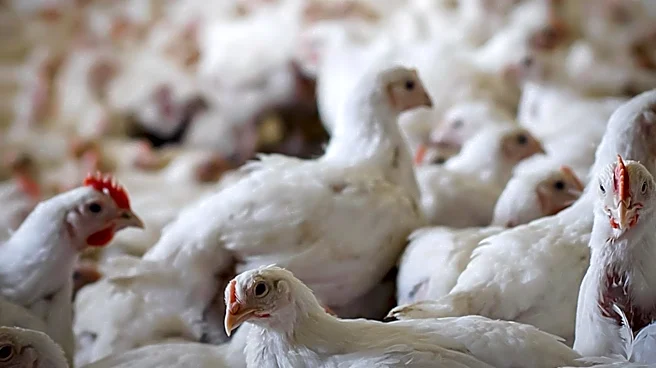
Research conducted by Queen’s University Belfast and LGC, and published in Poultry Science, indicates that processed animal proteins could significantly reduce the environmental impact of chicken production. The study, which reviewed 102 broiler feeding
studies and utilized environmental modeling for selected ingredients in a UK production system, found that diets incorporating meat and bone meal performed better than other soy substitutes. Conversely, microalgae, despite its potential as a feed ingredient, was shown to increase greenhouse gas emissions and water usage in the researchers' model. This suggests a potential shift in feed formulations to enhance sustainability within the poultry industry.
Why It's Important?
The findings are important for the U.S. agricultural sector, particularly the poultry industry, as they offer a pathway to mitigate environmental concerns associated with livestock production. With animal agriculture contributing approximately 14.5 percent of global anthropogenic greenhouse gas emissions, according to the Food and Agriculture Organization of the United Nations, identifying sustainable feed alternatives is crucial. The adoption of processed animal proteins in broiler feed could lead to reduced greenhouse gas emissions, land use, and water consumption per kilogram of chicken carcass produced. This could also influence consumer preferences and regulatory pressures for more environmentally friendly food production methods, potentially benefiting companies that embrace these sustainable practices.
What's Next?
The research suggests a need for further exploration and potential implementation of processed animal proteins as a primary ingredient in broiler feed within the U.S. poultry industry. Future steps may involve pilot programs by feed manufacturers and poultry producers to test the scalability and economic viability of these alternative diets. Regulatory bodies might also consider these findings when developing guidelines for sustainable agricultural practices. Additionally, continued research into the environmental impact of various feed ingredients, including microalgae, will be essential to refine and optimize sustainable chicken production methods.
Beyond the Headlines
Beyond the immediate environmental benefits, this research highlights a broader trend towards optimizing resource utilization within the food production system. The use of animal by-products in feed represents a circular economy approach, transforming waste into valuable inputs and reducing reliance on virgin resources like soy. This could lead to a more resilient and efficient agricultural supply chain. Furthermore, the study underscores the increasing role of scientific research and environmental modeling in guiding agricultural practices, pushing the industry towards data-driven decisions that balance productivity with ecological responsibility. This shift could also influence public perception of animal agriculture, fostering greater trust through demonstrable sustainability efforts.