




What's Happening?
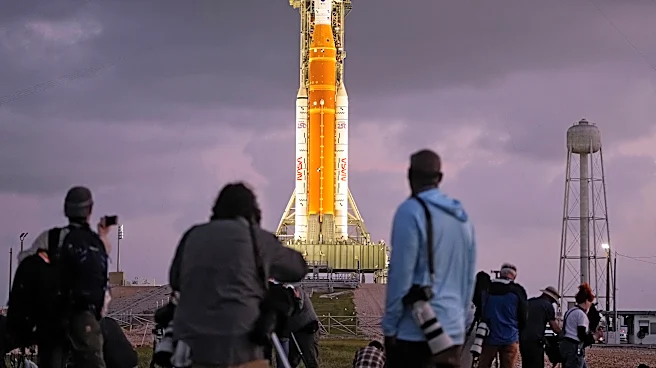
NASA's Artemis II mission, which launched on April 1, 2026, is set to conduct significant scientific observations as it orbits the moon. The mission includes astronauts Reid Wiseman, Victor Glover, Christina Koch, and Jeremy Hansen, who will be the first
humans to see the far side of the moon while it's illuminated. The crew will conduct reconnaissance work, observing key lunar features such as the Orientale basin and other craters. These observations aim to provide new insights into the moon's geological history and inform future lunar exploration efforts.
Why It's Important?
The Artemis II mission is crucial for advancing scientific understanding of the moon. By observing the far side of the moon, the mission can provide valuable data on lunar geology and impact history. These observations will help scientists understand the moon's formation and evolution, offering insights into similar processes on other celestial bodies. The mission also demonstrates the importance of human presence in space exploration, as astronauts can provide nuanced observations that complement satellite data. The mission's success could pave the way for future lunar exploration and scientific discoveries.
What's Next?
As the Artemis II mission progresses, the crew will continue to conduct observations and report their findings to scientists on Earth. The data collected will inform future missions, including Artemis III, which aims to land humans on the moon. The mission's success could influence future scientific priorities and funding for lunar exploration. The observations made during the mission will be analyzed by scientists, potentially leading to new discoveries and a deeper understanding of the moon's history.