

What's Happening?
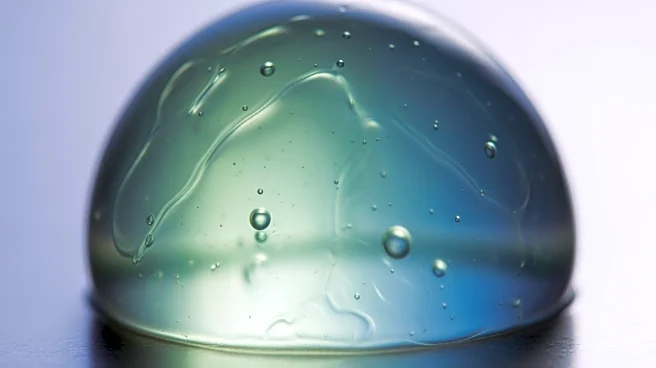
Researchers at Wageningen University & Research have developed a new class of material called a 'compleximer,' which combines the impact resistance of plastic with the malleability of glass. This amber-colored material defies traditional material science
theories, which suggested that materials that are easy to process are typically brittle. The compleximer is held together by physical attractive forces rather than chemical bonds, allowing it to be reshaped and repaired easily. This discovery challenges existing assumptions about charged materials and opens new possibilities for consumer goods.
Why It's Important?
The development of compleximers could significantly impact the consumer goods industry by providing a more durable and repairable alternative to traditional plastics. This material's self-healing properties mean that products made from it could have longer lifespans, reducing waste and the need for replacements. Additionally, the potential for creating biobased versions of compleximers aligns with global efforts to transition to sustainable materials, offering a greener alternative to fossil-based plastics. This innovation could lead to more environmentally friendly manufacturing processes and products.
What's Next?
The research team is focusing on developing biobased versions of compleximers to enhance their sustainability. This effort is part of a broader initiative to create materials that are not only easy to repair but also capable of breaking down biologically. As these developments progress, industries may begin to adopt compleximers for various applications, potentially transforming manufacturing practices and consumer products. The success of this material could also inspire further research into other charged materials with unique properties.
Beyond the Headlines
The introduction of compleximers highlights the potential for charged materials to exhibit unexpected behaviors, challenging long-held scientific assumptions. This breakthrough could lead to a reevaluation of material science principles and inspire new research into the molecular structures of other materials. The ability to repair and reshape compleximers with simple tools like a hairdryer also suggests a shift towards more user-friendly and sustainable consumer products, potentially influencing cultural attitudes towards consumption and waste.