



What's Happening?
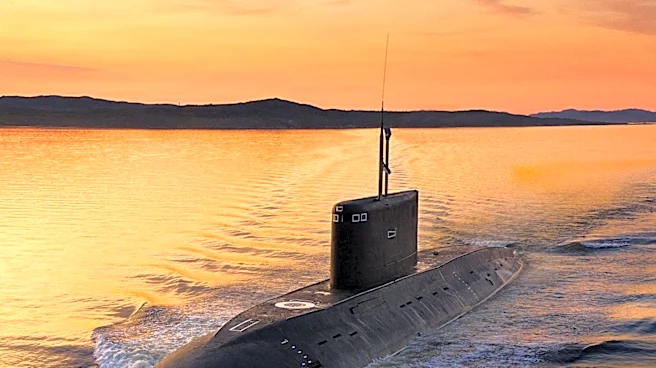
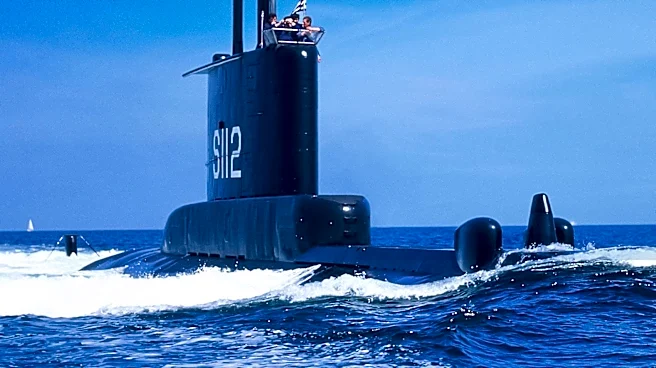
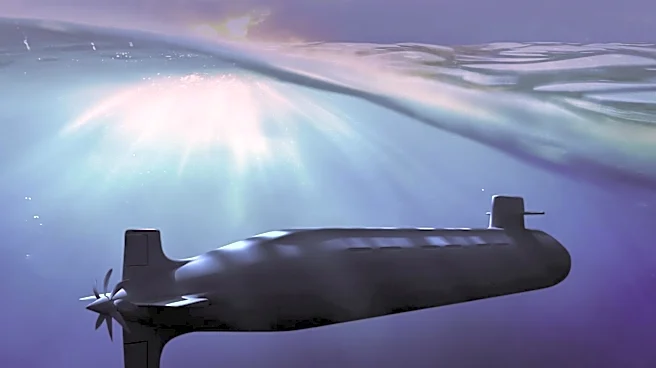
As of November 2026, the U.S. Navy operates 65 nuclear-powered combat submarines, comprising 47 attack submarines, 14 ballistic missile submarines, and four guided missile submarines. The Virginia class forms the largest group with 26 boats, serving as the backbone
of the attack fleet. However, the Navy's attack submarine count is currently 47, falling short of its goal of 66. This decline is attributed to the retirement of older Los Angeles-class submarines at a faster rate than new Virginia-class boats are being delivered. Shipyards have been delivering approximately 1.1 to 1.2 Virginia-class submarines per year since 2022, significantly below the Navy's target of two per year by around 2028. The oldest Ohio-class ballistic missile submarines are also nearing the end of their service lives, with the first, USS Henry M. Jackson, set to retire in 2027.
Why It's Important?
The shrinking size of the U.S. Navy's attack submarine fleet poses a significant challenge to national security and its ability to project power globally. Attack submarines are critical for anti-submarine warfare, anti-surface warfare, and land-attack missions. A reduced fleet size could strain operational commitments and potentially diminish the Navy's capacity to respond to emerging threats or maintain a continuous presence in key strategic areas. The production bottleneck for Virginia-class submarines, coupled with the retirement of older vessels, creates a numerical gap that could persist for years, with projections indicating the fleet may not reach its 66-boat goal until the 2050s. This situation is particularly concerning given the increasing naval capabilities of other global powers, which could challenge the U.S. undersea advantage. The issue also highlights the broader challenges in U.S. defense industrial capacity and the long lead times required for complex shipbuilding projects.
What's Next?
The Navy plans to replace the 14 Ohio-class ballistic missile submarines with 12 Columbia-class submarines, with the lead boat, USS District of Columbia, already experiencing delivery delays. To address the loss of Ohio-class guided missile submarines (SSGNs), the Navy is developing the Virginia Block V boats, which will incorporate the Virginia Payload Module (VPM) to carry additional Tomahawk cruise missiles. The first Block V SSGN is estimated for delivery in fiscal year 2029. However, even with these new additions, the overall attack submarine count is projected to remain low, reaching a nadir of about 47 in fiscal year 2030 before gradually increasing. The Navy continues to emphasize the importance of recruiting and retaining talented personnel for its undersea warfare community to ensure readiness and operational effectiveness, despite the numerical challenges in its fleet.
Beyond the Headlines
The current state of the U.S. submarine fleet underscores a critical long-term strategic challenge: balancing technological advancement with industrial capacity and fleet size. While the Navy is investing in next-generation submarines like the SSN(X) with advanced capabilities, the immediate concern is the ability to produce enough vessels to meet current and future operational demands. The reliance on nuclear-powered submarines, while offering superior endurance and speed, also means a smaller fleet compared to navies that operate diesel-electric submarines. This strategic choice necessitates a qualitative edge, which the SSN(X) aims to provide through drone integration and enhanced performance. The ongoing production shortfalls could also impact international partnerships, such as the AUKUS agreement to sell Virginia-class submarines to Australia, potentially diverting resources or further delaying U.S. fleet expansion. Addressing these issues will require sustained investment in shipbuilding infrastructure, workforce development, and strategic planning to ensure the U.S. maintains its undersea dominance.