




What's Happening?
The Shanghai Museum East Branch is currently hosting 'The Rise of China: Special Archaeological Exhibition on the Road to Qin Unification (Chapter 2: Qin: The State)'. This exhibition details the historical journey of the Qin people, from a small border
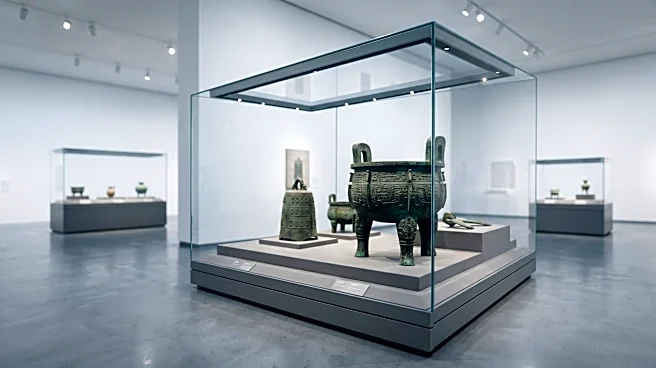
tribe to a powerful state that eventually unified China. The narrative begins with Feizi, skilled in horse-raising, being enfeoffed by King Xiao of Zhou, which elevated the Qin people from vassals to nobles. The exhibition highlights the Qin's eastward expansion, particularly their role in escorting King Ping of Zhou during his eastward relocation in 770 BC, which granted them land west of Mount Qi and integrated them into the feudal lords. Artifacts such as the Qin Gong Ding and Qin Gong Bo are on display, showcasing the Qin's adoption of Central Plains ritual and musical civilization. The exhibition also explores the cultural fusion present in Qin artifacts, which include both Zhou-style ritual vessels and steppe-style weapons and ornaments, reflecting their unique position at the intersection of farming and nomadic regions. The exhibition is free, requires no reservation, and runs until September 7, 2026, at the Shanghai Museum East Branch, 1F (Special Exhibition Hall 1).
Why It's Important?
This exhibition offers a significant cultural and historical insight into the foundational period of Chinese civilization, specifically the rise of the Qin State. Understanding the Qin's ascent provides crucial context for the subsequent unification of China and the establishment of its imperial system, which profoundly shaped Chinese society, governance, and culture for millennia. For international audiences, particularly those interested in global history and geopolitics, the exhibition illustrates the complex processes of state-building, cultural assimilation, and military expansion that characterized ancient empires. The display of artifacts like the Qin Gong Ding and Qin Gong Bo not only demonstrates the artistic and technological achievements of the era but also provides tangible evidence of the cultural exchanges and adaptations that occurred. The exhibition's focus on the Qin's inclusive temperament, stemming from their location between farming and nomadic regions, highlights how diverse influences can contribute to the strength and eventual dominance of a civilization. This historical perspective can inform contemporary discussions about cultural identity, national development, and the long-term impacts of historical trajectories.
What's Next?
The exhibition 'The Rise of China: Special Archaeological Exhibition on the Road to Qin Unification (Chapter 2: Qin: The State)' will continue to be open to the public until September 7, 2026. Following this chapter, it is plausible that subsequent chapters of 'The Rise of China' exhibition series will be presented, further detailing the Qin's journey towards unification and their eventual establishment of the Qin Dynasty. Such future exhibitions would likely explore the Qin's military campaigns, administrative reforms, and the construction of monumental projects like the Great Wall and the Terracotta Army. The ongoing nature of this series suggests a long-term commitment by the Shanghai Museum to comprehensively document and present the archaeological and historical narrative of ancient China. This could attract continued interest from both domestic and international visitors, fostering deeper understanding and appreciation for Chinese history and culture. Educational programs and scholarly discussions may also accompany future installments, further enriching the public's engagement with this pivotal period.
Beyond the Headlines
The exhibition delves into the deeper implications of how a seemingly minor entity can, through strategic development and cultural integration, rise to become a dominant power. The Qin's story is not merely one of military conquest but also of astute political maneuvering and the ability to synthesize diverse cultural elements. Their location at the crossroads of different cultural zones fostered a unique adaptability that proved crucial for their expansion. This historical narrative offers a compelling case study in statecraft and the dynamics of power shifts, demonstrating how long-term planning and resilience can lead to significant historical outcomes. Furthermore, the exhibition implicitly touches upon themes of national identity formation, as the Qin's eventual unification laid the groundwork for a unified Chinese identity that has persisted for centuries. The display of both Zhou-style and steppe-style artifacts underscores the complex interplay of cultural influences that shaped early Chinese civilization, challenging simplistic notions of cultural purity and highlighting the richness derived from cultural exchange and synthesis. This historical precedent can offer valuable insights into contemporary discussions about globalization and cultural diversity.