



What's Happening?
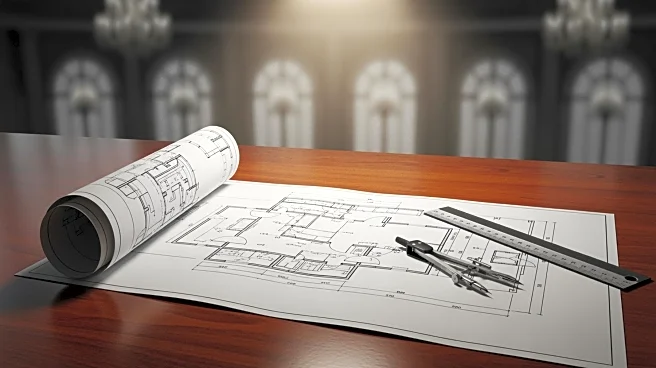
President Donald Trump has appointed Shalom Baranes, a Jewish architect known for his work on federal buildings, to lead the construction of a new ballroom at the White House. This decision follows the dismissal of the previous architect, James McCrery,
due to disagreements over the project's scale. The new ballroom, funded by private donations, is part of a significant renovation effort at the White House. Baranes, who has previously criticized Trump's immigration policies, brings a modern architectural style to the project, which contrasts with Trump's preference for neoclassical design.
Why It's Important?
The appointment of Shalom Baranes is notable for both political and architectural reasons. Politically, it highlights President Trump's willingness to collaborate with individuals who have previously opposed his policies, potentially signaling a shift in approach. Architecturally, Baranes' modern style may influence the aesthetic direction of the White House renovations, impacting its historical and cultural significance. The reliance on private funding for the project raises questions about the influence of private interests in federal projects, sparking debate over the separation of powers and governance.
What's Next?
As the project progresses, the collaboration between Trump and Baranes will be closely watched for its impact on the White House's architectural legacy. The ballroom's construction may set a precedent for future renovations and the role of private funding in federal projects. The outcome could influence public perception of Trump's presidency and his approach to federal infrastructure. The project's completion will also be a test of Baranes' ability to balance modern design with the historical context of the White House.