

What's Happening?
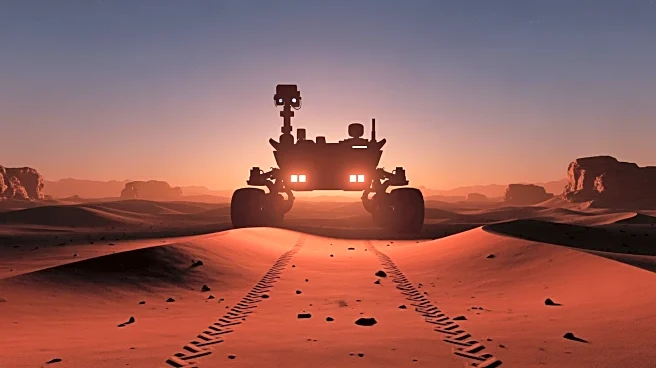
NASA's Curiosity rover has captured images of polygon-shaped features in the 'Monte Grande' boxwork hollow on Mars. These patterns, observed using the Mars Hand Lens Imager, are similar to those seen in other strata within Gale Crater. The discovery was
made during a drive from the 'Nevado Sajama' drill site, as part of a campaign to map the hollow-to-ridge structure. The rover's position during a previous visit had obscured these features, making this the first detailed observation of the polygons.
Why It's Important?
The discovery of polygonal patterns on Mars provides valuable insights into the planet's geological history and surface processes. These features may indicate past environmental conditions, such as the presence of water or ice, and contribute to our understanding of Mars' potential for past habitability. The findings enhance the scientific value of the Curiosity mission, offering new opportunities for research and exploration on the Red Planet.
What's Next?
Curiosity will continue its exploration of the Monte Grande hollow, conducting high-resolution imaging and compositional analysis of the polygonal features. The rover's ongoing mission aims to gather more data on Mars' geological history and assess its potential for supporting life. Future plans include further drives and contact science to expand the understanding of the region's geological context.