
What's Happening?
The New York City Department of Transportation (DOT) has released two potential redesign plans for an 11-block stretch of Park Avenue, from East 46th to East 57th Streets. The proposed changes aim to transform
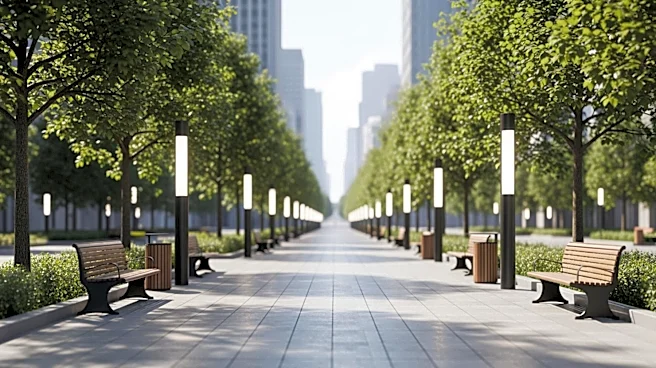
the area into a more pedestrian-friendly space by widening medians, expanding sidewalks, and adding greenery. The redesign is part of a broader initiative to revitalize public spaces in Midtown Manhattan. The plans include removing one traffic lane in each direction to create more room for pedestrians and cyclists. The DOT is seeking public feedback through an online survey to finalize the design. This effort is part of a larger project that coincides with the Metropolitan Transportation Authority's (MTA) ongoing rehabilitation of the Grand Central Terminal train shed, which necessitates the removal of existing medians.
Why It's Important?
The redesign of Park Avenue is significant as it reflects a growing trend in urban planning towards creating more pedestrian-centric environments. By prioritizing pedestrian spaces, the project aims to enhance the quality of life for residents and visitors, potentially boosting local businesses by increasing foot traffic. The initiative aligns with broader city goals to improve public spaces and reduce reliance on vehicles, contributing to environmental sustainability. The project also highlights the importance of community engagement in urban development, as public feedback is being actively sought to shape the final design. This transformation could serve as a model for other cities looking to balance urban development with environmental and social considerations.
What's Next?
The DOT will continue to gather public input through surveys and public meetings, with the next session scheduled for May 2. The feedback will be used to refine the design plans before implementation. The project is expected to proceed in tandem with the MTA's work on the train shed, ensuring that the redesign complements necessary infrastructure upgrades. As the plans progress, stakeholders, including local businesses and residents, will likely continue to engage in discussions to ensure the redesign meets community needs. The final design will be selected based on public input and feasibility studies, with construction expected to begin following the completion of the MTA's rehabilitation work.