





What's Happening?
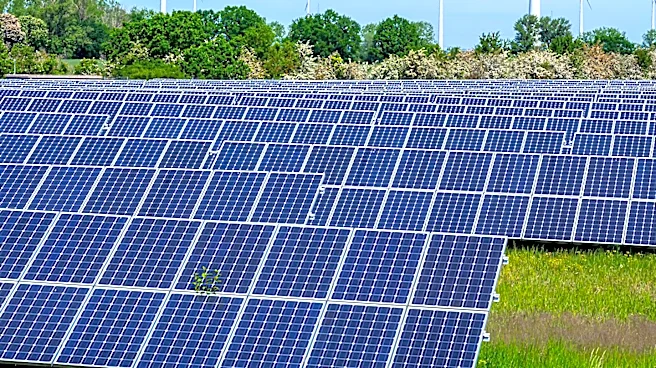
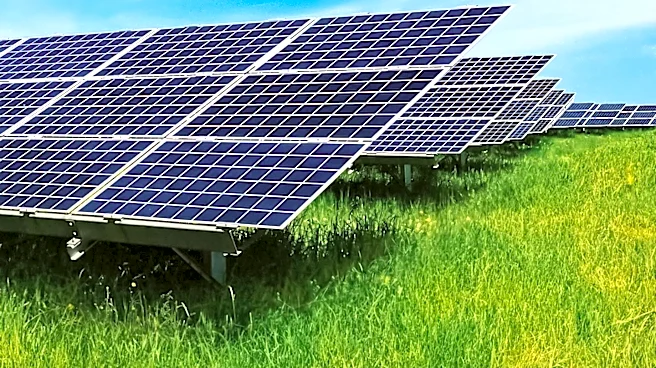
New York state regulators are currently evaluating proposals from utility companies to allow them to generate their own power, specifically through solar and wind farms. This move would reverse a policy from the 1990s that mandated utilities sell off
their power plants to foster competition. Utilities, including Con Edison, National Grid, and Avangrid-owned Rochester Gas and Electric and New York State Electric and Gas, argue that independent power companies have not met state climate goals due to financial and supply chain challenges. They contend that utility-owned generation is essential to reliably and affordably meet New York's increasing energy demands and achieve clean energy targets. The Public Service Commission is considering this change as part of its strategy to boost clean and renewable energy generation across the state.
Why It's Important?
This potential policy shift carries significant implications for New York's energy market and its climate objectives. If approved, it could fundamentally alter the structure of power generation in the state, potentially accelerating the development of renewable energy projects. Proponents argue that utility ownership could introduce greater oversight, enhance grid reliability, and lead to more renewable energy at potentially lower, fairer prices for consumers. However, critics, such as the Independent Power Producers of New York, express concerns that this change could stifle competition, lead to project delays, and ultimately increase costs for New Yorkers by shifting project risks onto the public. The debate highlights a tension between market competition and the perceived need for utilities to directly invest in and control renewable energy infrastructure to meet ambitious climate goals.
What's Next?
The Public Service Commission has not yet set a timeline for its decision on whether to allow utilities to own and operate power generation facilities. In anticipation of the decision, the Independent Power Producers of New York have launched a significant campaign to oppose the proposed change, arguing it would be detrimental to the state's energy market and economic development. This issue is not unique to New York, as similar discussions are taking place in other states like Pennsylvania, Ohio, New Jersey, and Illinois, indicating a broader national trend where utilities are seeking a more direct role in renewable energy generation. The outcome in New York could set a precedent for how other states approach the balance between utility involvement and independent power production in the transition to clean energy.
Beyond the Headlines
The debate over utility ownership of power generation facilities delves into fundamental questions about market structure, regulatory oversight, and the most effective path to achieving clean energy goals. Historically, the divestiture of power plants from utilities aimed to create a competitive market, theoretically leading to innovation and lower prices. Reversing this could centralize power generation, potentially offering greater coordination for large-scale renewable projects but also raising concerns about monopolies and reduced market efficiency. This discussion also touches upon the expertise and financial capacity of utilities versus independent developers in building and managing complex renewable energy infrastructure. The decision will reflect New York's strategic approach to energy transition, balancing economic principles with environmental imperatives and grid reliability.