







What's Happening?
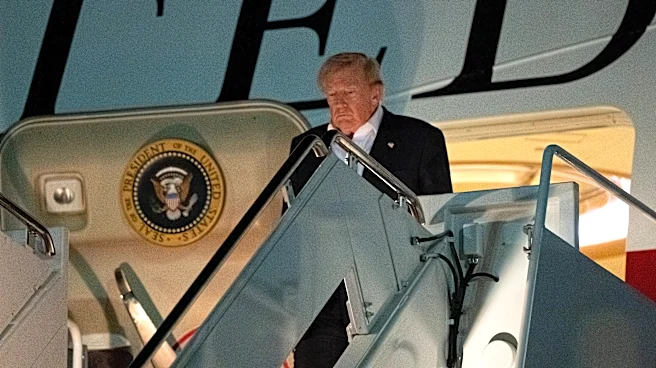
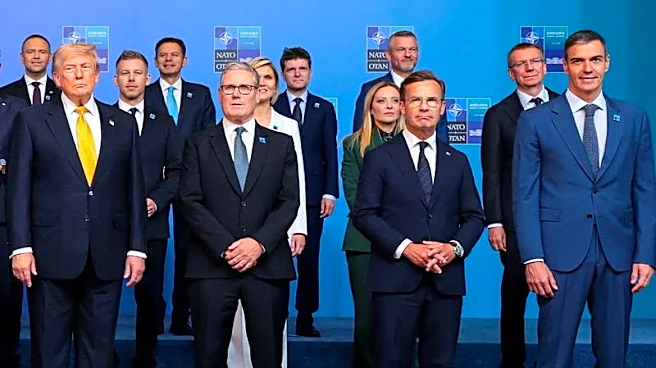
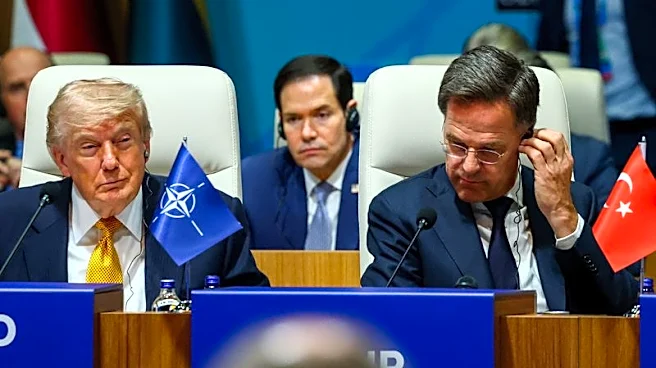
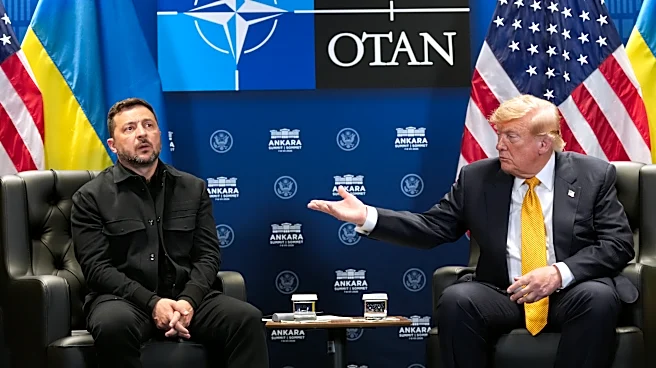
During a NATO summit in Ankara, Turkey, President Donald Trump expressed a positive shift in relations with Ukrainian President Volodymyr Zelenskyy. Trump praised Zelenskyy's efforts to negotiate an end to the ongoing conflict in Ukraine. In a significant
move, Trump announced that the U.S. would grant Ukraine a license to manufacture Patriot missile interceptors, a long-requested capability by Kyiv. This development marks a departure from previous tensions between the two leaders. The summit also saw Trump criticizing European NATO members for their defense spending and their stance on Iran, while emphasizing the need for Europe to take more responsibility for its security. NATO leaders pledged $80 billion to support Ukraine's defense needs, highlighting the ongoing threat posed by Russia.
Why It's Important?
The decision to allow Ukraine to manufacture Patriot missiles represents a major diplomatic win for Kyiv and could significantly enhance its defense capabilities against Russian aggression. This move may also alter the balance of military power in Eastern Europe, potentially escalating tensions with Russia, which opposes Ukraine's NATO aspirations. For the U.S., this decision aligns with Trump's vision of a 'NATO 3.0,' where Europe assumes greater responsibility for its defense. The summit's outcomes could influence U.S.-European relations, particularly regarding defense spending and military presence in Europe. The financial commitment to Ukraine underscores NATO's recognition of the strategic importance of supporting Ukraine against Russian threats.
What's Next?
Following the summit, NATO's financial and military support for Ukraine is expected to continue, with potential implications for U.S.-Russia relations. The Pentagon's review of U.S. military presence in Europe may lead to changes in troop deployments, affecting NATO's strategic posture. Ukraine's push for NATO membership remains a contentious issue, with Russia likely to respond to any perceived encroachment on its sphere of influence. The U.S. decision to lift Syria's terrorism designation could also impact regional dynamics, opening avenues for international trade and investment in Syria.
Beyond the Headlines
The summit's developments highlight the complex interplay of international diplomacy, military strategy, and economic interests. The U.S. decision to support Ukraine's defense capabilities could set a precedent for future NATO engagements with non-member states facing similar threats. The evolving U.S. stance on Syria reflects broader geopolitical shifts in the Middle East, with potential long-term implications for regional stability and U.S. foreign policy. The emphasis on increased defense spending by NATO members may also influence domestic political debates within those countries regarding military budgets and international commitments.