






What's Happening?
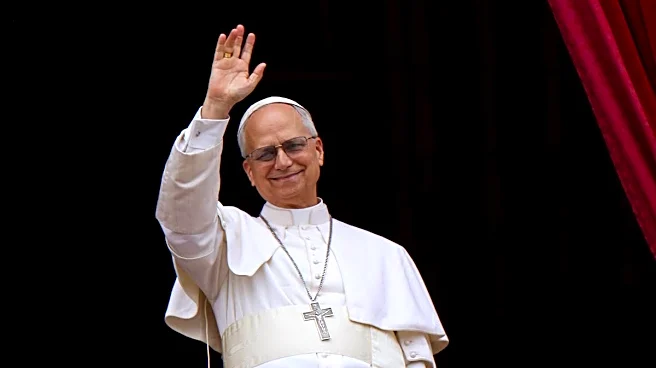
Pope Leo XIV has released an encyclical titled 'Magnifica Humanitas: On Safeguarding the Human Person in the Time of Artificial Intelligence,' which was signed on May 15 and published on May 25, 2026. The document, spanning approximately 42,300 words,
addresses a range of issues related to artificial intelligence (AI), including the concentration of technological power, threats to the dignity of work, distortions in public discourse, environmental impacts, and the risks associated with military uses of autonomous systems. The encyclical stresses that AI must be 'disarmed' and should not dominate humanity, underscoring the importance of human dignity and the common good over profit-driven decisions. The Vatican presented the document in a session that included Christopher Olah of Anthropic, highlighting the global interest in the ethical implications of AI.
Why It's Important?
The encyclical represents a significant moral intervention in the ongoing global discourse on AI ethics and regulation. By addressing the potential negative impacts of AI, Pope Leo XIV is urging policymakers, tech companies, and society at large to consider the ethical dimensions of AI development and deployment. The document's emphasis on human dignity and the common good challenges the tech industry to prioritize ethical considerations over profit. This call for stronger regulatory tools could influence international policy debates and encourage governments to implement more stringent regulations on AI technologies. The encyclical's focus on the environmental impact of AI's energy-intensive infrastructure also highlights the need for sustainable technological advancements.
What's Next?
The release of the encyclical is likely to spark further discussions among policymakers, tech companies, and civil society groups about the ethical use of AI. Governments may consider revising or introducing new regulations to address the concerns raised by Pope Leo XIV. Tech companies might face increased pressure to adopt ethical guidelines and transparency in their AI development processes. The Vatican's stance could also inspire other religious and ethical leaders to voice their opinions on AI, potentially leading to a broader movement advocating for responsible AI practices.
Beyond the Headlines
The encyclical's call for disarming AI and preventing its dominance over humanity raises important questions about the balance between technological advancement and ethical responsibility. It challenges society to reflect on the role of technology in shaping human experiences and the potential loss of human agency. The document also highlights the cultural and moral dimensions of AI, urging a reevaluation of how technology influences human values and social structures. This could lead to a long-term shift in how societies integrate technology into daily life, prioritizing ethical considerations alongside innovation.