







What's Happening?
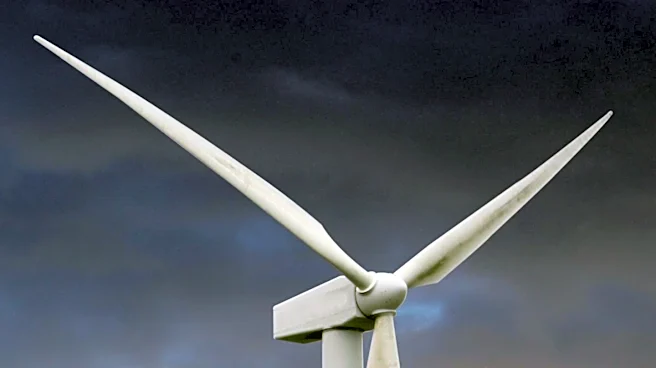
China's ambitious plan to expand its wind power capacity to 1.3 terawatts by 2030 is expected to drive significant growth in the adoption of hybrid wind turbine towers. According to the Renewable Energy Market Review 2026, hybrid towers, which combine
steel and concrete, are projected to account for 60% to 70% of new onshore wind installations. This transition is supported by annual wind installations exceeding 120 gigawatts between 2026 and 2030. The shift towards hybrid towers is driven by their cost-effectiveness and ability to support larger turbines, enhancing energy production in regions with low wind speeds and complex terrain.
Why It's Important?
The expansion of hybrid wind towers is crucial for meeting China's renewable energy targets and reducing reliance on fossil fuels. This development could have global implications, as it may influence other countries to adopt similar technologies to enhance their wind energy infrastructure. The increased use of hybrid towers could also stimulate innovation and competition among manufacturers, potentially leading to cost reductions and improved efficiency in wind energy production. Additionally, the integration of hybrid towers may require new insurance solutions to address project risks, impacting financial and insurance sectors.
What's Next?
As China progresses towards its wind capacity goals, the demand for hybrid towers is expected to rise, prompting manufacturers to expand their offerings and construction companies to enter the market. This growth may lead to advancements in tower design and construction techniques, further optimizing wind energy production. The need for comprehensive insurance solutions will likely increase, encouraging the development of integrated insurance products that cover the entire lifecycle of wind projects. Stakeholders, including developers, investors, and insurers, will need to collaborate to ensure the successful deployment of hybrid towers.